
Childhood vaccination rates across the U.S. are declining, leaving some pediatricians with families who don’t meet their practice’s immunization requirements. In some cases, this means those parents are having to find a new physician.
According to a recent CDC report, vaccination coverage among kindergarteners has decreased. The number of exemptions has increased from 3.6 percent during the 2024-2025 school year to 4.2 percent during the 2025-2026 school year. About 280,000 kindergartners attended school without documentation of their MMR vaccine series.
According to the CDC, in 2024-2025, medical exemptions stayed at around 0.2 percent. However, non-medical exemptions reached 3.4 percent.
Since most pediatric practices require vaccinations, some U.S. parents have been denied services at these specific locations. While some parents are delaying childhood vaccinations, some are denying them entirely.
Dr. Alana J. Arnold, M.D., M.B.A., a pediatric emergency medicine consultant, Aspen Ideas Health Fellow at The Aspen Institute, and founder and CEO of PEMPal and Parent Partners, said pediatricians have the right to deny families who refuse vaccination requirements.
“Nobody goes into pediatrics wanting to turn a family away,” Dr. Arnold told BlackDoctor Pro. “They’ve had these policies for years and have spent visit after visit counseling the same parents. At some point, a practice has to decide who it’s responsible for, and the answer includes the two-week-old in the waiting room, the child on chemo, and the kid with sickle cell disease who can’t afford an exposure.”
Dr. Arnold emphasized, however, that these families are not “banned” from asking questions about vaccines.
“Parents have every right to make decisions for their children, but that right doesn’t extend to putting other people’s children at risk, and it doesn’t obligate a physician to practice below the standard they believe in, especially when it is medically sound and evidence-based, for the better good of the community, and society at large – from a public health standpoint,” Dr. Arnold said.
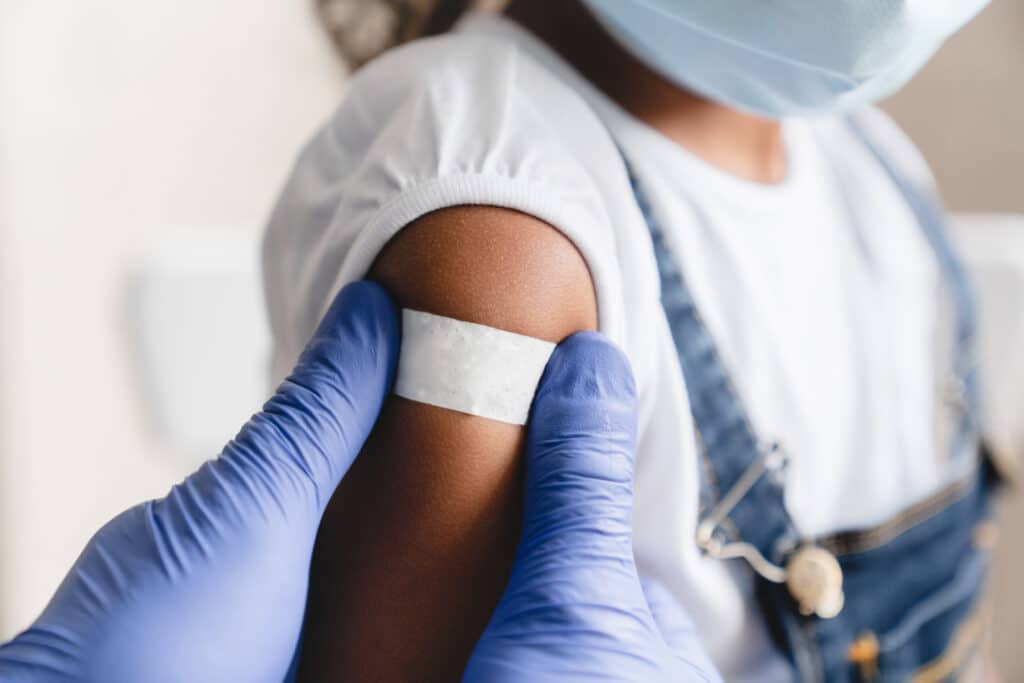
Unvaccinated children are not just a danger to their own health, but to the health of others, including pregnant women, the elderly, and even children who are vaccinated.
“When I hear that a pediatrician finally drew a line, I don’t see a doctor abandoning a family,” said Dr. Arnold. “I see a doctor who had to have the hard conversation many times before I ever met that child.”
When it comes to protecting Black children, vaccination requirements matter even more.
“Black children already carry more asthma, more sickle cell disease, and less consistent access to care, so when preventable diseases come back, they hit our kids harder,” said Dr. Arnold.
For many parents, the reason behind the denial of vaccinations is misinformation. Social media has rapidly spread false information about the safety of vaccines, including that these immunizations can, among other things, alter one’s DNA, cause autism, or cause illness.
“Add the fact that most parents today have never seen measles, whooping cough, or Hib meningitis, and the shot starts to feel like the risk while the disease feels hypothetical,” Dr. Arnold said. “In our community there’s also real, earned mistrust of medicine, and real barriers like missed work, transportation, and gaps in coverage.”
To prevent transmission of the measles virus, vaccinations must be at least 95 percent. During the 2025-2026 school year, that number for kindergarteners with MMR vaccinations dropped to 92.4 percent; some states have rates as low as 75.2 percent. Consequently, numerous measles outbreaks have occurred across the country, with the most cases reported since 1991. Most cases were among people aged 19 and younger.
Vaccination requirements may differ by practice, but many primary care physicians are starting to follow the American Academy of Pediatrics’ (AAP) recommendations rather than federal guidelines. While the AAP recommends a comprehensive childhood immunization schedule for 18 diseases, the CDC has decreased its recommendations to only 11 diseases.
“Vaccination was never only a private choice,” Dr. Arnold said. “It’s an agreement we make with each other, and it works only when nearly everyone keeps it.”
By subscribing, you consent to receive emails from BlackDoctor.pro You may unsubscribe at any time. Privacy Policy & Terms of Service.
Are you a healthcare professional? Register with us today!