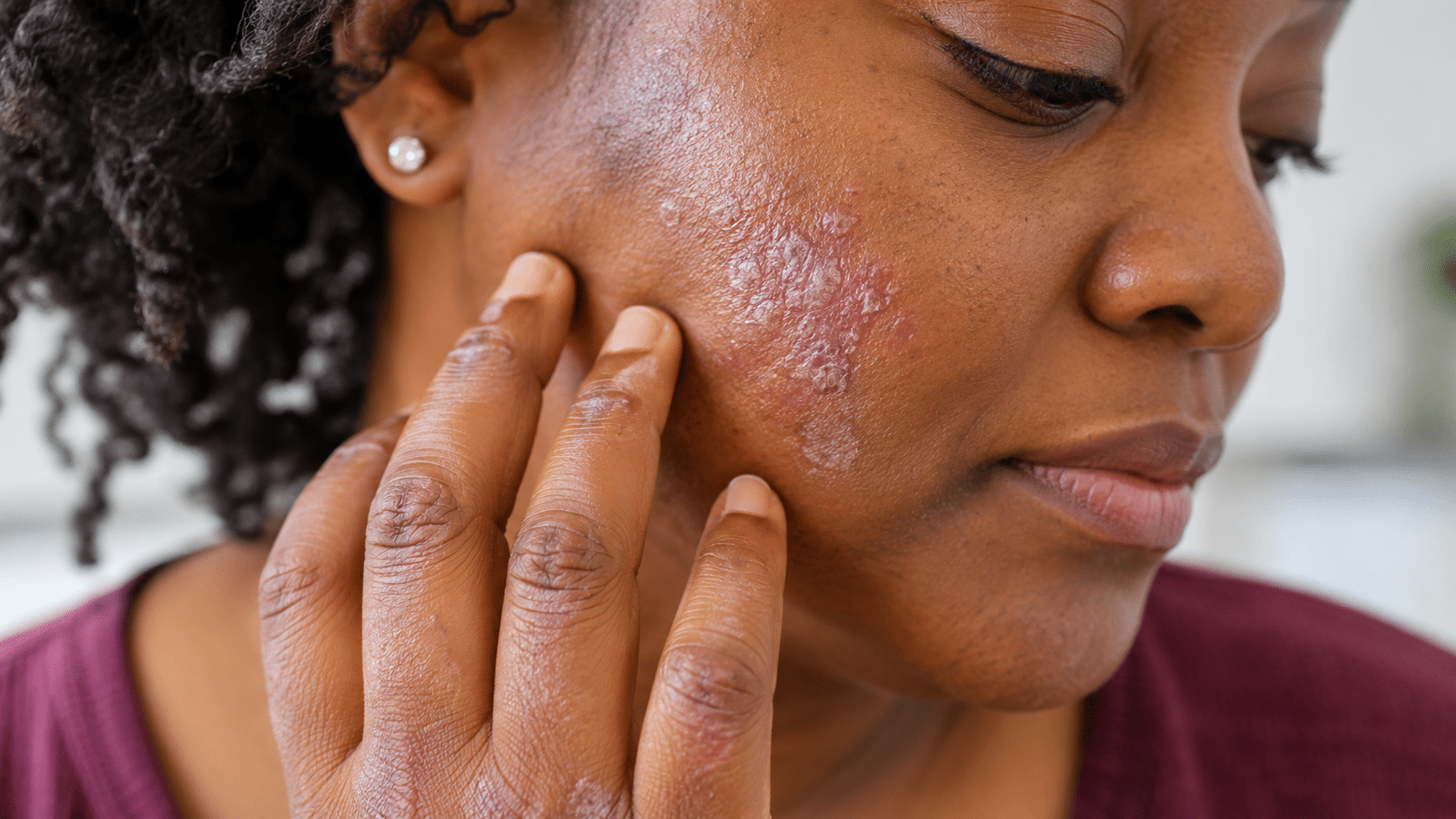
Skin conditions don’t always look the same across skin tones. For Black patients, common conditions such as eczema, psoriasis, and acne may appear differently than they do in medical textbooks, where lighter skin has historically been more widely represented.
According to Dr. Gervaise Gerstner, a New York City-based board-certified dermatologist and clinical associate faculty member at Mount Sinai, these differences can make certain conditions harder to recognize. “Inflammation does not always appear bright red. Instead, it may present as purple, gray, brown, or a deeper shade of the patient’s natural skin color,” Gerstner explains.
As a result, some conditions may be overlooked or diagnosed later. For healthcare professionals, recognizing how skin conditions appear across different skin tones is essential to providing effective care. Ahead are 10 common skin conditions to recognize when caring for Black patients.
Atopic dermatitis, commonly known as eczema, is a chronic inflammatory condition that causes dry, itchy, and irritated skin. While eczema is often associated with redness, it may look different on darker skin. “Eczema, for example, may appear as darker, thickened, or ashen patches rather than the classic red, inflamed areas,” Dr. Gerstner said. Healthcare professionals should look for changes in skin texture, persistent itching, and dryness rather than relying on redness alone.
Acne is one of the most common skin conditions, but its effects can extend beyond breakouts. For Black patients, acne may lead to post-inflammatory hyperpigmentation, which occurs when inflammation leaves dark marks on the skin. Dr. Gerstner explained that these marks can persist after the original breakout has healed, making early treatment particularly important.
Healthcare professionals should address both active breakouts and discoloration when developing treatment plans. Dr. Gerstner noted that ingredients such as retinoids and azelaic acid may help, although treatment should be introduced gradually to avoid irritation.
Seborrheic dermatitis, a common inflammatory condition that affects areas with oil-producing glands, including the scalp, eyebrows, and sides of the nose. Symptoms may include itching, flaking, and irritated patches. On darker skin, affected areas may appear lighter or darker than the surrounding skin rather than visibly red. For Black patients, scalp care recommendations should also account for hair texture, protective styles, and washing routines. Medicated shampoos and antifungal treatments may help control symptoms, although treatment plans should be adapted to the patient’s needs.
Psoriasis is a chronic immune-related condition that causes skin cells to build up, creating thick, scaly patches. Although psoriasis is commonly described as producing red plaques, Dr. Gerstner explained that it can appear differently on darker skin. “In Black patients, psoriasis may look different from the bright red plaques commonly shown in medical textbooks. Lesions may appear purple, dark brown, or gray, often with thick, silvery or grayish scales.” Psoriasis commonly affects the scalp, elbows, knees, and lower back.
Dr. Gerstner also encouraged healthcare professionals to examine the nails and ask about joint pain, swelling, or morning stiffness, which may indicate psoriatic arthritis. Treatment may include topical medications, light therapy, or systemic medications, including biologics, depending on the severity of the condition.

Hidradenitis suppurativa (HS) is a chronic inflammatory condition that causes painful lumps beneath the skin, often in areas where skin rubs together, such as the underarms, groin, and under the breasts. These lumps may drain, recur, and eventually cause scarring. HS disproportionately affects Black patients in the United States, making early recognition particularly important. Because symptoms can resemble boils or recurring infections, patients may experience delays in receiving an accurate diagnosis.
Healthcare professionals should ask about recurring painful bumps, drainage, and scarring. Treatment may include medications, wound care, and procedures, depending on the disease’s severity.
Keloids are raised scars that develop when the body’s healing process produces too much collagen. Unlike typical scars, keloids extend beyond the original wound and may continue growing over time. According to Dr. William Posten, a board-certified dermatologist and chief dermatologist for Sensus Healthcare, keloids can develop after piercings, surgery, burns, cuts, and even acne-related inflammation. Black patients have a higher risk of developing keloids, although Dr. Posten emphasized that skin color alone does not determine a person’s risk.
Family history and inherited differences in wound healing may also play a role. Prevention is particularly important for patients with a history of keloids. Before a piercing or procedure, Dr. Posten recommends asking about personal and family history of keloids.
Traction alopecia, a form of hair loss caused by repeated pulling or tension on hair follicles. It can develop from hairstyles such as tight braids, ponytails, extensions, or weaves. Early signs may include thinning around the hairline, broken hairs, and scalp tenderness.
Healthcare professionals should ask about hairstyling practices without assuming a patient’s hair care routine. Early intervention is important because prolonged tension can permanently damage hair follicles. Recommending lower-tension hairstyles and addressing inflammation may help prevent further hair loss.
Central centrifugal cicatricial alopecia, or CCCA, is a type of scarring hair loss that predominantly affects Black women. The condition typically begins near the crown of the scalp and gradually spreads outward. Patients may experience thinning, itching, burning, or tenderness, although some have no noticeable symptoms.
The exact cause remains unclear, but genetics and other factors may contribute. Because CCCA can permanently damage hair follicles, early diagnosis is essential. Treatment focuses on controlling inflammation and preserving remaining hair.
Melasma is a pigmentation condition that causes brown or gray-brown patches, commonly on the cheeks, forehead, and upper lip. It may be associated with sun exposure, hormonal changes, and pregnancy. Sun protection is an important part of managing pigmentation concerns.
When discussing sun protection for darker skin tones, Dr. Gerstner recommends broad-spectrum sunscreen with SPF 30 or higher and emphasizes that darker skin still needs protection from UV exposure. Depending on the patient’s needs, treatment may also include prescription topical medications.
Tinea capitis is a fungal infection of the scalp that can cause itching, scaling, broken hairs, and patches of hair loss. The condition is particularly common in children and may be mistaken for dandruff or other scalp conditions. In some cases, patients develop painful, inflamed areas that can lead to scarring if not treated promptly.
Healthcare professionals should consider fungal testing when symptoms suggest tinea capitis. Treatment generally requires oral antifungal medication because shampoos alone cannot eliminate the infection.
Recognizing how common skin conditions appear on darker skin can help healthcare professionals identify concerns earlier and develop more appropriate treatment plans. Beyond managing active symptoms, clinicians should consider the lasting effects of hyperpigmentation, scarring, and hair loss, which can affect a patient’s confidence and quality of life. Ultimately, familiarity with these conditions can help healthcare providers distinguish between similar presentations and determine when further evaluation or referral is needed.
By subscribing, you consent to receive emails from BlackDoctor.pro You may unsubscribe at any time. Privacy Policy & Terms of Service.
Are you a healthcare professional? Register with us today!