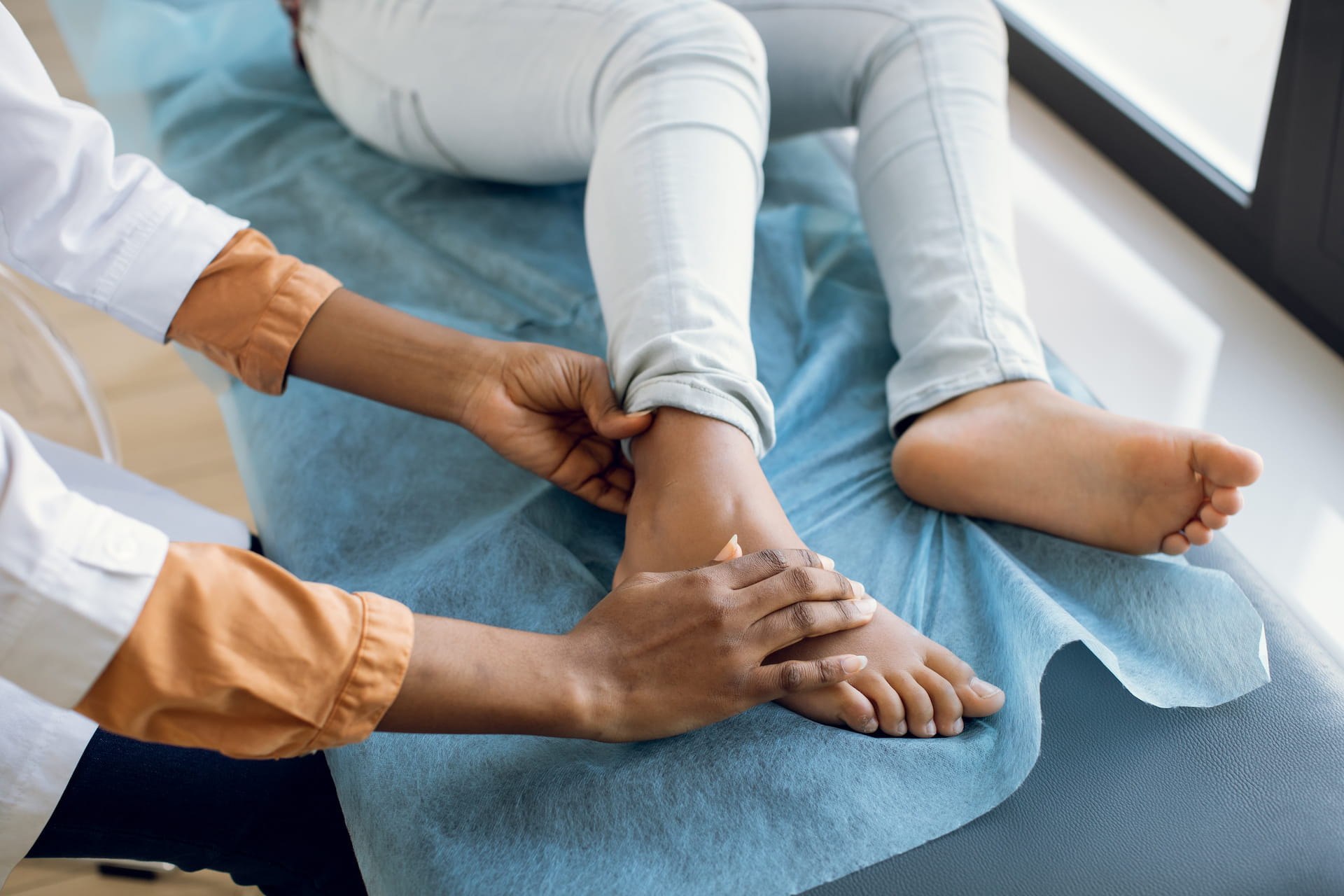
For a variety of reasons, people often forget about their feet in overall health unless diabetes or injury creates major problems. But Black people have many reasons to pay attention to this body part and to stay alert about how foot health may be affecting their posture or causing pain.
An article published in Arthritis Care & Research examined racial differences in foot disorders among 1,695 research participants. The study found that among the cohort, Hallux valgus (bunions) (64 percent), hammer toes (35 percent), overlapping toes (34 percent), and pes planus (flat feet) (23 percent) were common. “Compared to Caucasians, African Americans were almost three times more likely to have pes planus and were nearly five times less likely to have Tailor’s bunions or pes cavus. Among the non-obese, African Americans were more likely than Caucasians to have hallux valgus,” the study read.
Prevention and early interventions are hard to operationalize when patients normalize chronic foot and ankle pain. Patients may attribute persistent discomfort to aging, weight, arthritis, or an old injury, while primary care clinicians may initially manage symptoms without determining whether specialized foot and ankle care could address the underlying problem. But persistent pain can affect gait, mobility, exercise, independence, and quality of life long before it becomes a major disability.
For physicians, recognizing when a foot or ankle complaint warrants a more specialized assessment can help prevent a manageable problem from becoming a chronic mobility issue. A full foot and ankle assessment, particularly when a patient presents with a pedal complaint, can help identify conditions that may benefit from earlier podiatric intervention.
For primary care clinicians, routine pedal examinations are particularly valuable. Examining the feet can reveal problems that may not be apparent from the patient’s description of pain alone.
Primary care physicians are often the first clinicians to hear about chronic lower-extremity pain. According to Emmanuel Atiemo, M.D., FAAOS, an orthopedic surgeon at MedStar Health in Maryland, this makes the primary care visit an important gateway to specialty treatment. Aging and obesity can contribute to joint deterioration and pain in lower extremities.
Dr. Atiemo said one of the simplest tools available to clinicians is observation. A patient who walks into the examination room with a limp may already be demonstrating a clinically relevant functional change. But even if a patient never mentions their feet, Dr. Atiemo recommends that physicians observe how a patient moves, gather a thorough patient history of injury or discomfort, and perform a clinical examination that includes the ankle and feet.
Many routine issues, such as plantar fasciitis, a primary care physician can treat, but if a condition falls outside the physician’s expertise, they should refer promptly. “When one encounters a condition that they may not be familiar with, they should never hesitate to refer the patient to a specialist who may be more adept at treating that condition,” Dr. Atiemo said.
Downplaying patient pain, minimizing abnormalities, ignoring discoloration that could be a melanoma, or simply missing an ingrown nail, scar, or infection may lead to poor patient care. Skipping the feet in an examination can lead to grave consequences.
Breann Wilson, DPM, the only Black female podiatrist in Buffalo, New York, said patients may be reluctant to bare their feet for many reasons. Some feel ashamed of their feet’s cosmetic features and fear a physician will only reinforce that embarrassment during an exam. Others have cultural or religious concerns about being touched or examined by a physician of the opposite gender. And there are some regional perceptions that soles of the feet are the lowest and dirtiest part of the body, and so asking someone to touch that part of the body is inherently disrespectful. Patient preferences also affect whether they seek foot or ankle care at all.
Physicians will need to lead with empathy when treating a patient who may have advanced health issues as a direct result of waiting too long to seek care. A foot exam during an annual physical may be the norm, but geriatric patients may need to be seen more frequently. People who need help with nail or skin care may need to see their care provider monthly for monitoring and maintenance. Concerns around health care access, transportation, and cost are legitimate reasons for patient delays in seeking treatment for ankle or foot problems.
The number of applications to podiatric medical schools in the United States continues to decline, making it clear that specialist retirement and attrition will pose significant problems for patient care. Podiatrists are already rare in rural areas, and it is difficult to get timely appointments where podiatrists are available.
The high prevalence of diabetes in the Black community means that foot care is essential to maintaining overall health. We are learning a lot about diabetes and how it affects Black patients. A recent University of Colorado study found that “many young people in Africa, and some in the U.S., may have a non-autoimmune form of type 1 diabetes,” for example.
Paul J. Carroll, DPM, FACFAS, a podiatric foot and ankle surgeon at MedStar Health, said all diabetic patients, regardless of how controlled their diabetes seems, should see a podiatrist for a diabetic foot evaluation. Diabetes increases a patient’s risk for ulcerations and infections.
Dr. Wilson added that people with diabetes should have their feet checked at least once a year. Prompt care for ulcers can save limbs.

Our feet are our base, and when that foundation is faulty, we can see many other misalignments and maladies. Patients frequently present with multiple conditions that can contribute to lower-extremity discomfort. Osteoarthritis, changes in weight, reduced physical activity, previous injuries, and age-related joint deterioration can all play a role.
“Podiatrists can contribute to multidisciplinary pain management by offering surgical and non-surgical treatment options for areas of concern,” Dr. Carroll explained. “Non-surgical treatments include orthotics, bracing, and injections for certain conditions. Surgical treatment can be offered for conditions such as bunions and hammertoes to help reduce pressure points.”
Referral to podiatry doesn’t necessarily mean surgery, though. Podiatric care may fit into a broad physical rehabilitation plan. Dr. Atiemo describes multidisciplinary management as potentially including physical therapy for musculoskeletal rehabilitation, along with pain and anti-inflammatory medication, to help patients participate more effectively in therapy and achieve pain-free mobility.
Earlier specialist involvement can help physicians identify and address the source of the problem.
By subscribing, you consent to receive emails from BlackDoctor.pro You may unsubscribe at any time. Privacy Policy & Terms of Service.
Are you a healthcare professional? Register with us today!