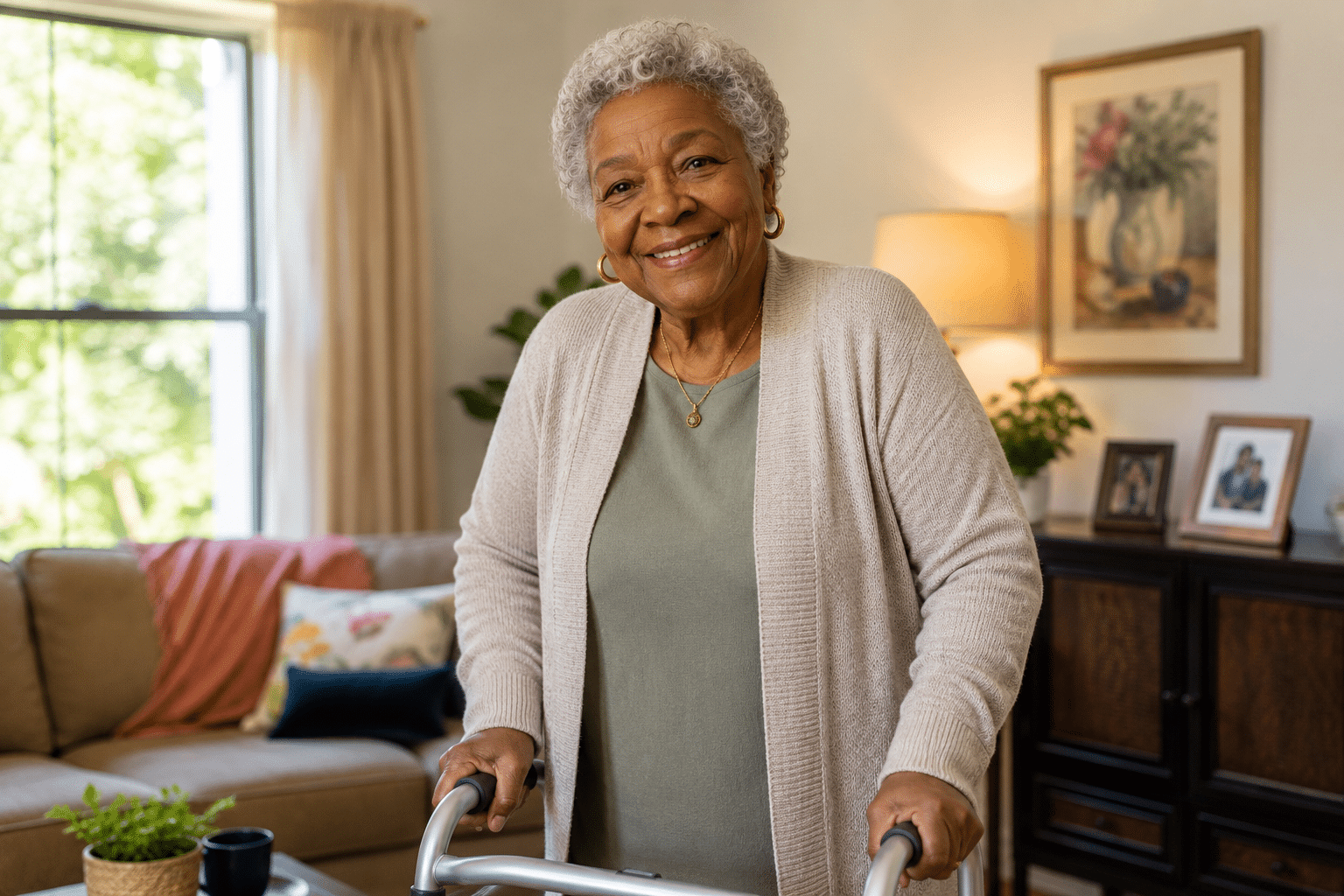
Census population data has been made public, sharing new trends in aging that reflect demographic realities: the median age is 39.4, and women outnumber men among seniors. “In 2001, there were 70.6 males for every 100 females age 65 and older. By 2025, the ratio had increased substantially to 81.6,” the April 2026 report says. Moreover, the Urban Institute projects that the number of Americans aged 65 and older will more than double over the next 40 years, reaching 80 million by 2040.
As the U.S. population ages, more families are confronting difficult questions about caregiving and long-term support. These decisions can be particularly complex for Black families, whose cultural beliefs, access to care, and skepticism towards healthcare systems can complicate medical decisions. Understanding those complexities within the full continuum of caregiving and elder care options can help clinicians better guide patients and families toward solutions for healthy aging.
Understanding the different options before they are needed is one of the most important ways that families can prepare to help their aging loved ones.
Most older adults prefer to have in-home care for as long as possible. According to the 2025 Caregiving in the U.S. survey, “Sixty-three million American adults provide ongoing care to adults or children with a medical condition or disability — representing almost one-quarter of all adults in the United States. This represents a dramatic increase of 45 percent since 2015. Of these 63 million caregivers, 59 million care for an adult with a complex medical condition or disability.”
Home care can include:
Residential communities designed for active adults (usually 55 and older or 62 and older) can be a happy medium for aging seniors whose homes are no longer suitable for their daily activities. Not only do these spaces offer more social activities, but they also provide security, medical staff, retrofitted design features (think seated or railed bathing, wheelchair ramps, etc.), and conveniences like optional laundry and meal services. Often, these apartment or townhouse-style accommodations reduce the burden of home maintenance, too. Among the biggest barriers can be cost, which AssistedLiving.org estimates by state.
Many independent living communities can provide mild assisted living support (with more hands-on nursing and care) without another move. However, seniors may need some convincing that this setup is right for them. “Most elders resist care because they value their independence and privacy,” says Kate Tulenko, MD, MPH, MPhil, FAAP. “They see someone coming into their home as a slippery slope to them being forced out of their home into an institutional nursing home.”
When patients require around-the-clock supervision, complex medical management, or rehabilitation services, skilled nursing facilities may become necessary. “For families who do need a facility setting, assisted living averages $5,800 to $6,200 per month, and skilled nursing runs anywhere from $9,500 for a semi-private room to $12,000 for private,” says Nicole Brackett, LPN, CEE, Director of Quality and Care Delivery at Homewatch CareGivers. These residential and facility-based care options include memory care and skilled nursing, which provide 24/7 supervision and support.
According to AARP, memory care is best described as a specialized form of residential long-term care for adults living with Alzheimer’s disease, dementia, or other conditions that affect memory and daily functioning. Unlike traditional assisted living, memory care communities focus not only on safety and supervision but also on preserving cognitive vitality for as long as possible. Residents enjoy structured activities and interactive games designed to stimulate memory, attention, language, and problem-solving skills. These social activities have a purpose — improving brain health and stemming decline. For patients experiencing confusion and wandering, memory care delivers a supportive environment. And for caregivers, these facilities can offer stress relief. Elevators that require a code, outdoor spaces with secure entry/exit, and tracking monitors can provide the infrastructure to ensure that residents feel free to explore without causing themselves any harm.
Palliative care is frequently misunderstood as end-of-life care, but it can be introduced at any stage of a serious illness — often at diagnosis or disability onset. Patients with heart failure, cancer, COPD, dementia, Parkinson’s disease, kidney disease, and other chronic conditions may need palliative services while continuing treatment. This care can happen at home or in a facility, but it balances comfort with curative measures.
Families rely on physicians to identify who is an appropriate candidate, as few families know when this kind of care is preferable to alternatives. The medical components of palliative care are generally covered by Medicaid, Medicare, and most health insurance plans.
Hospice care can be the hardest to face, but this care is usually directed by a physician who believes that a patient has less than six months to live. Focused on comfort and pain relief rather than cures, it can also be delivered at home, in assisted living facilities, nursing homes, or dedicated hospice centers, based on a family’s needs and the patient’s health condition. Doctors are usually not part of the hospice care team; trained medical professionals, clergy, and social workers are, and are best equipped to offer holistic support.
For many families, the stigma of “giving up” on a cure or the complex guilt of feeling like you’re leaving a loved one to die can severely postpone this kind of care. But delays can make this difficult time physically painful for the patient, only exacerbating the care burden and grief for all.
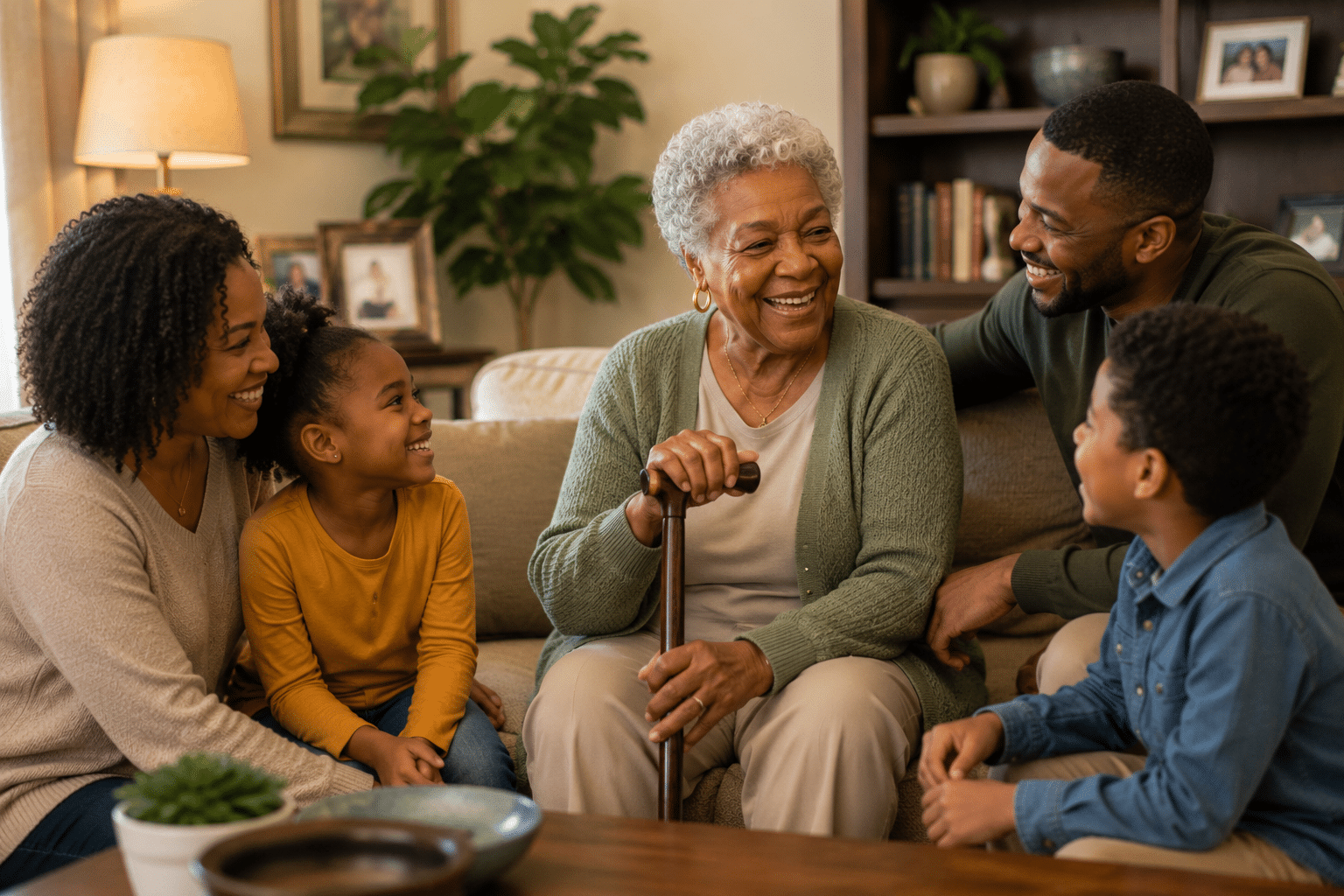
These days, elder care (like all healthcare) goes far beyond institutions and physician-focused interventions. Increasingly, older adults are using telehealth services, remote health-monitoring devices, and digital tools that enable clinicians and caregivers to track health concerns while supporting longevity and independence at home.
Technology is easing the social isolation some people feel as they age. Virtual social groups, online meet-ups, and digital communities are creating new ways for older adults to stay mentally active and emotionally connected. As physicians help families plan for aging, technology is playing an important role in promoting healthy aging, reducing barriers to timely care, and improving mental wellness.
Evan Farr, a Certified Elderly Law Attorney and retirement planner in the national capital region, says he has seen costs, denials, lack of coordination among various service providers, and lack of timely intervention become significant barriers to accessing necessary elder care support.
Prior to needing constant supervision, he says that families should consider addressing issues related to Advance Directives, Durable General Powers of Attorney, Healthcare Decision-Making Authority, emergency contacts, medication management, access to financial resources, caregiver backup plans, and payment options for Long-Term Care support. “Typically, families delay this process until after an elderly individual experiences a catastrophic event resulting in the inability to remain safely in their current dwelling. At this point, families are exhausted, fewer alternatives exist, and the costs associated with securing appropriate support are exponentially greater,” he explains.
Recent research on aging in Black people shows that there are high-risk factors for certain diseases and conditions that can appear to have a sudden onset, but trends are showing that they commonly affect older Black adults. Chronic stress, discrimination, living conditions, and even diet, can all play a part in accelerated aging and the weathering effect.
Physicians help families assess whether a patient’s current living situation remains safe and medically appropriate. But often it is the physician who must lead these difficult conversations, especially when the patient and the family may be in denial or unwilling to accept the signs of steep decline.
Rather than focusing solely on diagnoses, physicians should ask whether patients can safely bathe, dress, eat, manage medications, respond to emergencies, and remain independent without continuous supervision.
For an elder whose decline has been swift or sudden, the loss of income and independence can create significant financial strain for a whole family.
Stephanie Smith, LCSW, ASW-G, C-ASWCM, a Colorado-based clinical social worker with specializations in gerontology and long-term care, says, “Most of what passes for ‘the elder care system’ in this country is unpaid family caregivers; Medicaid waiver navigation and the financial planning that has to start five years before someone needs care or the door closes.”
She explains that Medicaid Home & Community-Based Services waivers allow states to pay for home-based services, such as personal care, respite, adult day, and, in some states, a paid family caregiver, which is often the most affordable way to keep someone at home. Long-term care insurance and hybrid life policies cover some of this, but most families don’t have these plans in place.
Then there’s the formal continuum: adult day programs, assisted living, skilled nursing, memory care, with hospice and palliative care running alongside. “The official version sounds tidy. The lived version isn’t,” Smith says. “In 2024, a private nursing home room ran $127,750 a year, assisted living $70,800, and a home health aide almost $78,000 (Genworth & CareScout, 2025).”
While it is easy to see why a family needs this kind of help, it is equally easy to see why it is hard to commit to the cost. “Eldercare is expensive because it is often needed 24/7 and is far more complex than other types of care provision, such as childcare,” explains Dr. Tulenko.
Physicians are often the first professionals with the credibility and experience to raise safety concerns without triggering stigma or offense.
Using routine visits to integrate caregivers can help. When physicians ask probing questions, it can help patients and family members realize where they need help:
Importantly, these discussions should be framed around maintaining independence rather than highlighting health decline. Senior care planning should begin early — as early as 50 years old, especially for those still looking to get long-term care insurance while employed. Setting and sticking to a plan, shared between physicians, families, and patients, can help defray costs and assuage guilt around difficult health decisions.
As Smith puts it, “Care planning isn’t a solo sport.”

By subscribing, you consent to receive emails from BlackDoctor.pro You may unsubscribe at any time. Privacy Policy & Terms of Service.
Are you a healthcare professional? Register with us today!