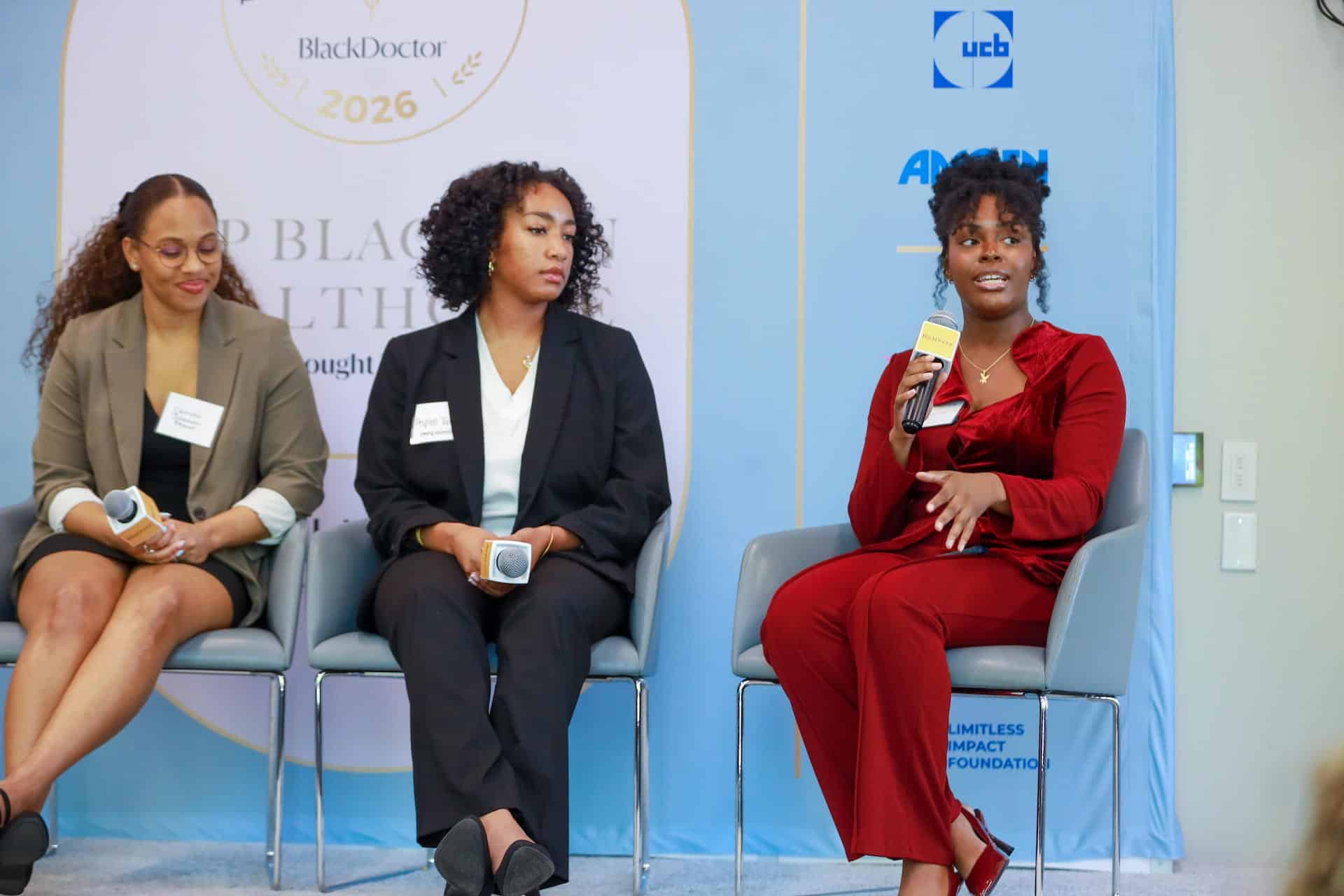
To see changes in the healthcare system, we have to look towards future providers. At the conclusion of BlackDoctor’s 10th Annual Thought Leadership Summit, the panel “Next Up: Powering the Future of Our Health Workforce” explored how we can build a stronger, more equitable healthcare workforce. Panelists Dr. Janet Franklin (Amgen), Peyton Turner (Emory Healthcare), and medical and physician students representing the Social Mission Alliance (SMA) discussed the importance of workforce diversity and supporting the next generation of healthcare professionals.
Many healthcare leaders have expressed concerns about the declining number of young Black students pursuing careers in medicine and healthcare leadership. Representation is key for Black communities, as it can influence patient trust, communication, cultural understanding, and future career aspirations for young people.
“I worry there’s not going to be a lot of doctors that look like me in the future,” said Johnson-Bryant, a third-year emergency medicine student.
Panelists also discussed DEI changes that have restricted and shifted language around diversity efforts from institutions supporting students of color. Fortunately, many organizations continue to push for equity in different ways despite political and funding pressures.
Workforce diversity ultimately affects patient care and community health outcomes, so it must be at the forefront of discussions if we want to improve health outcomes and reduce disparities.
The panelists discussed how mentorship remains one of the most critical tools for helping students succeed in healthcare careers. Great mentors can provide guidance, networking opportunities, encouragement, and career exposure. The panelists emphasized that a great mentor doesn’t need to share the student’s exact background. Johnson-Bryant encouraged students not to limit themselves to mentors who share their exact background. “Don’t be one-dimensional — be open to diversity,” she said.
Medical students should seek mentors from across specialties, professions, and backgrounds to gain knowledge from multiple areas that can guide their future careers.
However, panelists discussed that not everyone is suitable for mentorship, and a poor relationship could impact a student’s career aspirations.
“Many students don’t know opportunities in healthcare outside of clinical,” Turner said. Students who may not see a fit in medicine may overlook other opportunities to contribute to the field, such as public health, healthcare administration, research, and biotechnology. Programs like Amgen’s summer internship help expose students to other career pathways much earlier, so they can decide what they want to do before applying to graduate or professional programs.
Better outcomes for underrepresented populations don’t fall solely on providers — they require the involvement of public health professionals, researchers, administrators, and bioinformaticians to make a meaningful change.
Workforce development programs can help students get access to internships, mentorship, academic support, and career preparation. Yet funding challenges continue to threaten many programs serving underrepresented students.
Dr. Franklin encourages organizations and institutions that want to support workforce diversity to fund these programs and actively reach out to these communities. “Intentionality is everything,” she said. “Develop and broaden the schools you reach out to. Make yourself available to the audience you want to reach out to you.”
Investing in students today can help improve healthcare access and outcomes for future generations.
The panelists emphasized that data should be used to identify healthcare disparities and improve outcomes. Workforce diversity and equitable healthcare systems are tied directly to patient outcomes.
“Everything we do in healthcare is informed by data, and we should use that data to address outcomes,” Turner said.
As we continue to see healthcare workforce shortages, underrepresentation, and inequitable access across underserved communities, the future generation of healthcare professionals must be well-prepared to improve these outcomes.
Although much of the conversation focused on workforce development, mentorship, and policy, the panelists emphasized that patient care remains the ultimate goal.
“The most important person in the room is the patient,” Johnson-Bryant said.
Building a diverse and well-supported healthcare workforce is ultimately about ensuring every patient and community can access equitable, compassionate, and culturally informed care.
By subscribing, you consent to receive emails from BlackDoctor.pro You may unsubscribe at any time. Privacy Policy & Terms of Service.
Are you a healthcare professional? Register with us today!