Melanoma often goes undiagnosed in Black patients, leading to worse outcomes. Enhance screening, awareness for early detection.
Skin cancer is the most common form of cancer affecting all races and ethnicities. In the Black and African American communities, skin cancer is less common compared to individuals with lighter skin, but is often more deadly because it goes undiagnosed. Squamous cell carcinoma (SCC), basal cell carcinoma (BCC) and melanoma are the most common types of skin cancer in Black Americans.
SCC may appear on any part of the body, including areas not exposed to the sun. It typically appears as a firm, raised bump or a growing, scaly sore. BCC, the most prevalent type of skin cancer, develops in the basal cells of the skin and is usually associated with prolonged exposure to the sun.
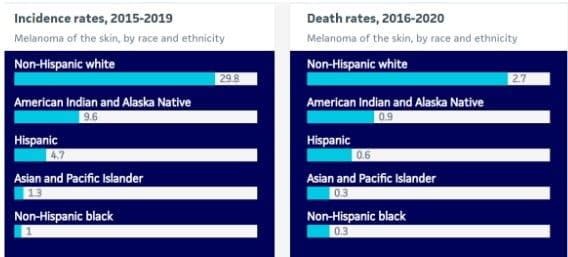
Darker-skinned people have a relatively low risk of melanoma compared to individuals with lighter skin. However, Black patients are more likely to have advanced melanomas at diagnosis, with a five-year survival rate of 70% compared with 92% for White patients. Melanoma in individuals with darker skin often appears in the palms, soles or under the nails, and can sometimes be mistaken for other skin conditions.
In 2023, it is estimated that there will be 186,680 cases of melanoma diagnosed, according to the American Cancer Society’s Cancer Facts and Figures report. Of those, 89,070 cases will be non-invasive and 97,610 cases will be invasive.
Over the years, Black people have not been the focus of melanoma public health and educational campaigns. Researchers at Stanford University gauged awareness levels of melanoma among Black people to inform the development of relevant public health messages to promote early detection of melanoma. A total of 26 Black or African American people from 10 different states participated in the study. Researchers identified five main themes around melanoma awareness, including:
The study results, published in BMJ Open, do not surprise Alexis. Low public awareness of the risk of melanoma in the Black community is one of the main reasons why advanced melanoma risk is high among Blacks. “There’s also lower rates of screening and the tendency for melanomas among the Black population to occur in less exposed areas such as the sole of the foot, nail unit or mucous membranes,” says Alexis.
According to Alexis, there are certain factors that may contribute to the development of skin cancer in Black people, including:
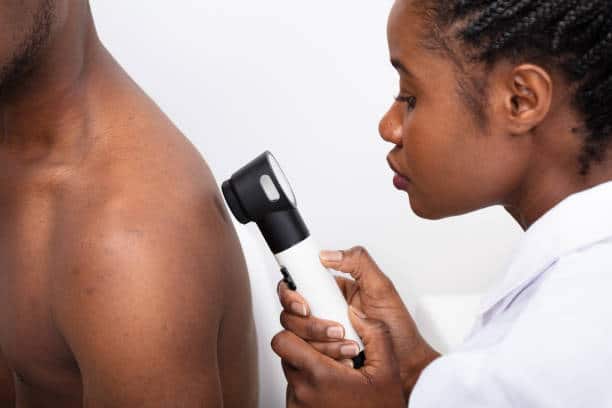
An effective public awareness campaign for the Black community should provide education around how patients can perform self-skin exams that include the palms, soles and nails. “An important step in melanoma screening is routine examination of those areas, and the rest of the body, during annual exams,” says Alexis.
RELATED: Black Melanoma Patients Tend to Show Advanced Disease
By subscribing, you consent to receive emails from BlackDoctor.pro You may unsubscribe at any time. Privacy Policy & Terms of Service.
Are you a healthcare professional? Register with us today!