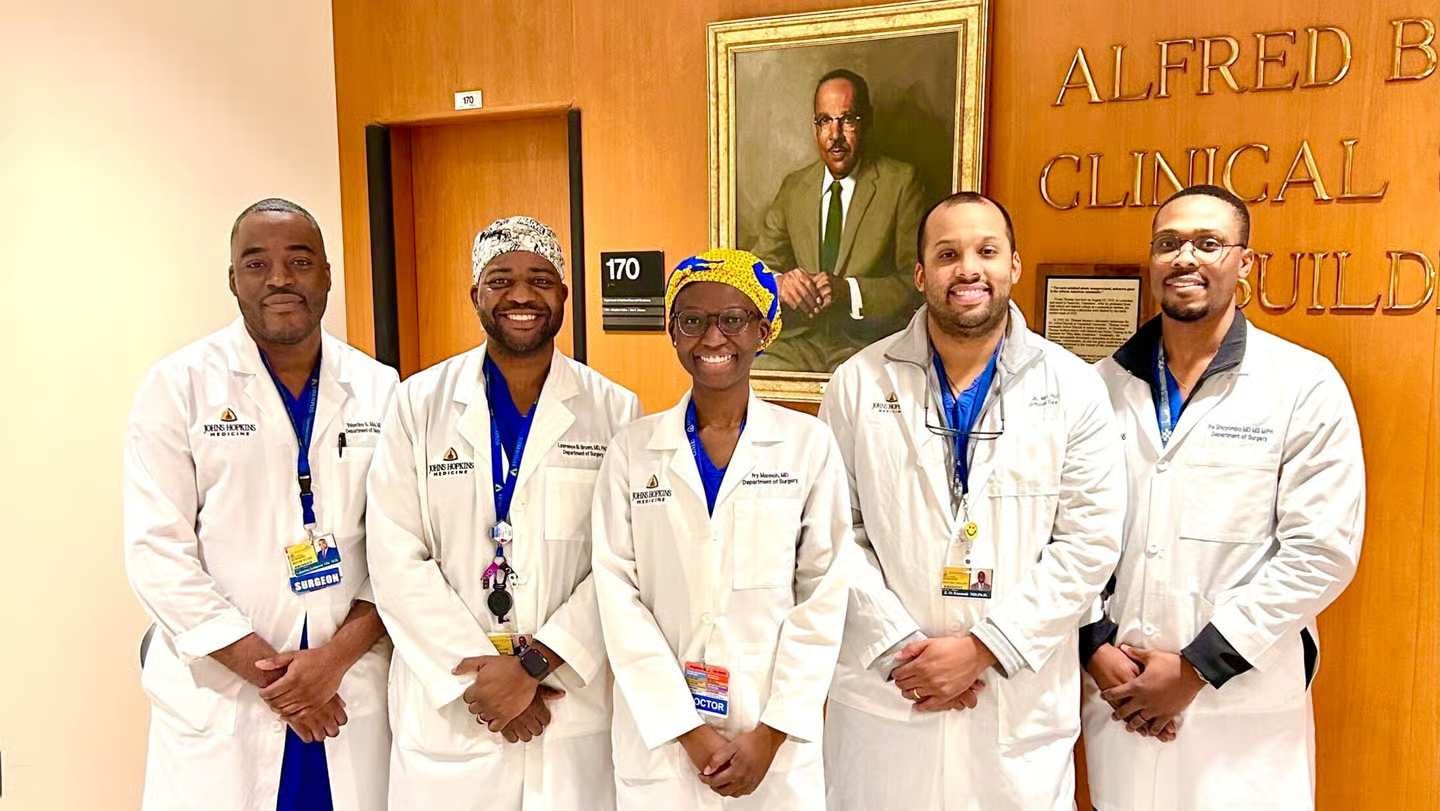
Black history has been made once again, as five Black surgical residents are now leading the Halstead Trauma and Acute Surgery service at the prestigious Johns Hopkins Hospital for the first time in the institution’s history.
The achievement, announced in February, extends beyond a single hospital. It reflects the progress in increasing representation within medicine, particularly in medicine, where Black Americans make up about 13 percent of the U.S. population, but account for roughly 6 percent of physicians nationwide.
Here are the five Black surgeons making history:
“A historic moment for our program. For the first time in program history, our flagship Halsted service (Trauma & ACS) is led by an all-Black team of senior residents and PGY-2s [Postgraduate Year Two residents],” the hospital’s Instagram caption read. “Black individuals comprise 13% of the U.S. population but only 6% of general surgeons nationwide. This #BlackHistoryMonth, we recognize this milestone while continuing the work to build a more representative surgical workforce.”
“My parents are so proud. I am the first physician in my family, and I think it’s so impactful,” Brown told ABC News. “It’s service. That’s what’s important to me. Equity has to remain at the forefront of how we deliver patient care, how we do research, how we scale programs up in our healthcare system.”
To celebrate the milestone, the all-Black clinical team took a photo in front of a portrait of Vivien Thomas. Thomas was a pioneer in cardiac surgery and became the first Black person to wear a white coat at Johns Hopkins Hospital in 1941. Although he never received formal medical training due to racism and discrimination at the time, he developed surgery techniques and instruments that helped transform heart surgery and influenced generations of surgeons.
In 1976, Johns Hopkins awarded Thomas an honorary doctorate, The Grio reported.
“The best part is that I get to save lives and have an impact every single day,” Dr. Shoyombo told ABC News. “To anyone who’s watching, realize that your dream and capacity can only be limited by you. And if you can think it, see it, then you can absolutely reach it.”
Visibility is critical for inspiring young Black students considering careers in medicine. Organizations like Black Men in White Coats are exposing Black youth to the field through summits, while other institutions are funding opportunities for hands-on learning and mentorship.
This milestone at Johns Hopkins Hospital is both a celebration and a reminder of the work still needed to build a more representative healthcare workforce.
By subscribing, you consent to receive emails from BlackDoctor.pro You may unsubscribe at any time. Privacy Policy & Terms of Service.
Are you a healthcare professional? Register with us today!