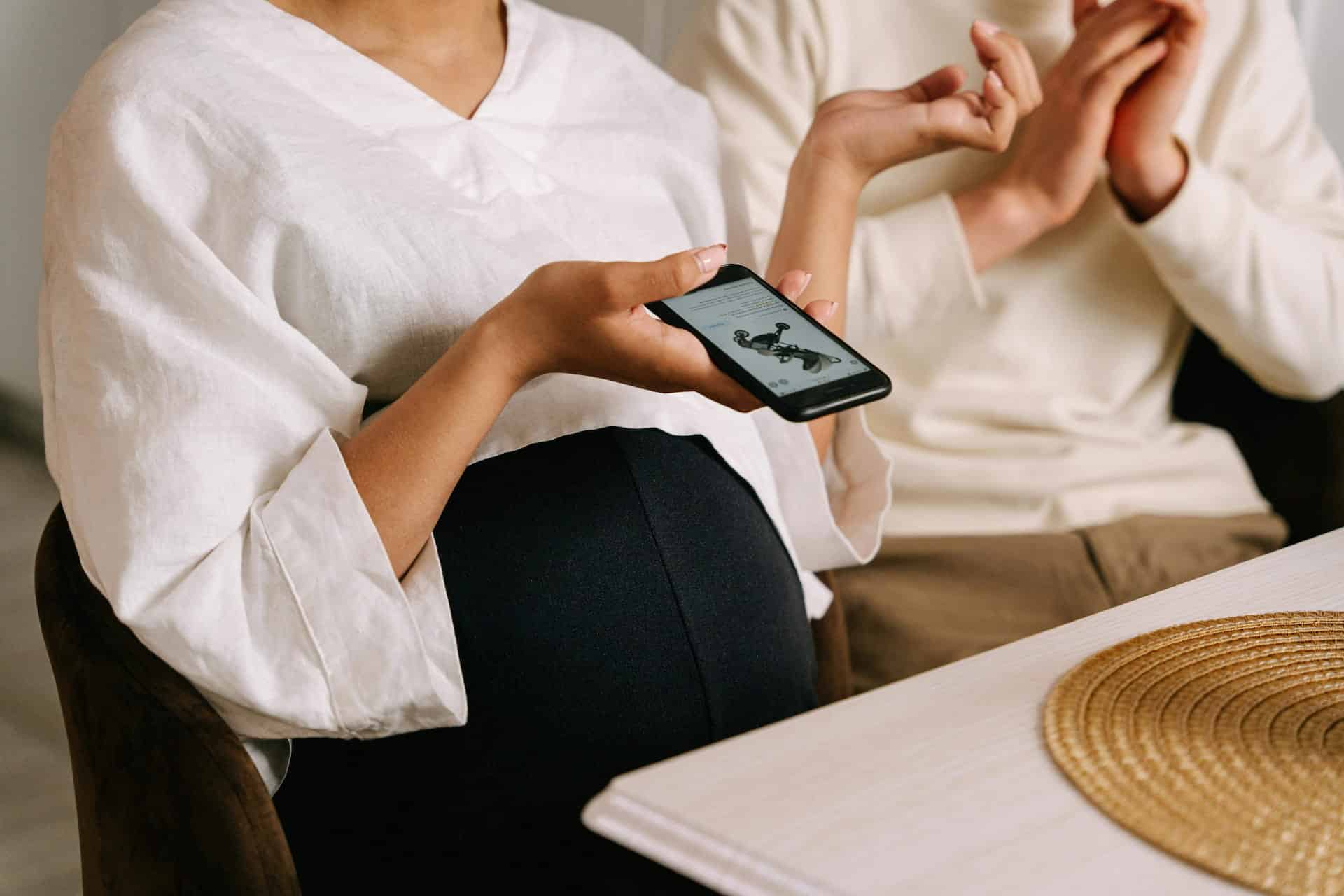
Social media has become a central part of many people’s lives. What began as a way to stay connected with friends and family has evolved into a go-to source for information, including health advice. More people are turning to platforms like TikTok before speaking to their doctors to decode various health concerns, like pregnancy symptoms, and to share birth experiences. For many people, especially during these moments of uncertainty, social media can feel immediate, accessible, and reassuring.
A quick search can pull up thousands of videos of people trying to understand their bodies, interpret symptoms, and even approach medical care. But that convenience can come with real risks.
OB-GYNs and doulas say more patients are arriving at appointments with information they’ve gathered online, sometimes helpful but often misleading or incomplete. While it’s natural to seek out answers, medical guidance shared on social media isn’t personalized, and in some cases, can be inaccurate or unsafe. A user online experiencing similar symptoms doesn’t always point to the same diagnosis, and treatment plans should always be tailored to an individual’s specific health needs.
Vanessa Archil, MD, FACOG, Chair of the OBGYN Department at Saint Anthony Hospital, and Iriana Kay, a certified full-spectrum doula, share what they’re seeing in appointments — and how social media is shaping the questions patients bring into the room.
In the United States, Black women are three to four times more likely to die from pregnancy-related causes than white women, according to the Centers for Disease Control and Prevention (CDC). These disparities are driven by systemic racism, bias in care, and gaps in access, which have contributed to a deep mistrust in the healthcare system.
As a result, some Black women turn to social media not just for information, but for validation, community, and shared experiences that they may not feel they receive in clinical settings. While these platforms can offer support, they also blur the line between advice and evidence-based care.
Much of the information patients bring into appointments often reflects what’s trending online. Dr. Archil says she regularly sees patients who come in with advice from social media. She notes that patients frequently ask about fertility diets, supplements, and even methods that claim to influence a baby’s sex. She also added that others come in curious about complementary approaches like acupuncture to support conception.
When patients arrive confident in information that may not be medically accurate, Dr. Archil says the goal isn’t to dismiss their concerns — but to guide them. “I use gentle redirection to point out some of the inaccurate points,” she explains. “I often open a webpage and look up imaging and charts during the visit to understand the basic science.” To build trust, Archil says she starts by meeting patients where they are. “I ask what they’ve found in their research and use that as a starting point,” she says. “My goal is for the patient to walk away feeling heard and understanding the plan moving forward.”
While social media spans across patient groups, Dr. Archil notes that many Black patients engaging with online health content are doing so intentionally. “They’re often trying to prepare themselves for the appointment so they can ask questions and have a baseline understanding,” she says, adding that many are also aware of the disparities in Black maternal health outcomes.
Ultimately, she emphasizes that not all online advice is created equal. “Some healthcare professionals share recommendations based on anecdotal experience, and non-professionals are often speaking from their own lived experiences,” Dr. Archil explains. “But that doesn’t mean it applies to every patient.”
But it’s not only OB-GYNs noticing this shift. Doulas are seeing similar patterns — often shaped by both information and fear. Kay says many of her clients come in with concerns influenced by social media, particularly around induction, Pitocin use, pushing positions, and fears of vaginal tearing.
In one case, a client brought in a TikTok video about vaginal tearing and recovery. Instead of dismissing it, Kay reviewed the video with her and used it as a starting point for conversation — explaining what’s medically likely and how factors like positioning and breathing can influence outcomes.
For many Black women, Kay says, these conversations go beyond curiosity. “Many women — especially Black women — don’t always feel safe or fully heard within the healthcare system,” she explains. “Social media becomes a place where they can access firsthand experiences and feel less alone.”

The rise of social media as a go-to source for health information highlights a deeper gap in how care is experienced and how important it is to improve Black women’s healthcare. Social media is not just influencing decision-making; it is also filling a space that the healthcare system has not fully addressed. This dynamic can create new challenges, including the spread of misinformation.
Black women are not just turning to platforms like TikTok due to curiosity — it is about seeking reassurance, understanding, and a sense of community that may feel missing in clinical settings. Addressing this shift requires more than correcting what patients see online. It calls for a deeper commitment to patient-centered care.
While social media can offer connection and shared experiences, it cannot replace personalized, evidence-based medical care. Black women must feel empowered to ask questions, trust their providers, and receive care that fully acknowledges their experiences.
By subscribing, you consent to receive emails from BlackDoctor.pro You may unsubscribe at any time. Privacy Policy & Terms of Service.
Are you a healthcare professional? Register with us today!