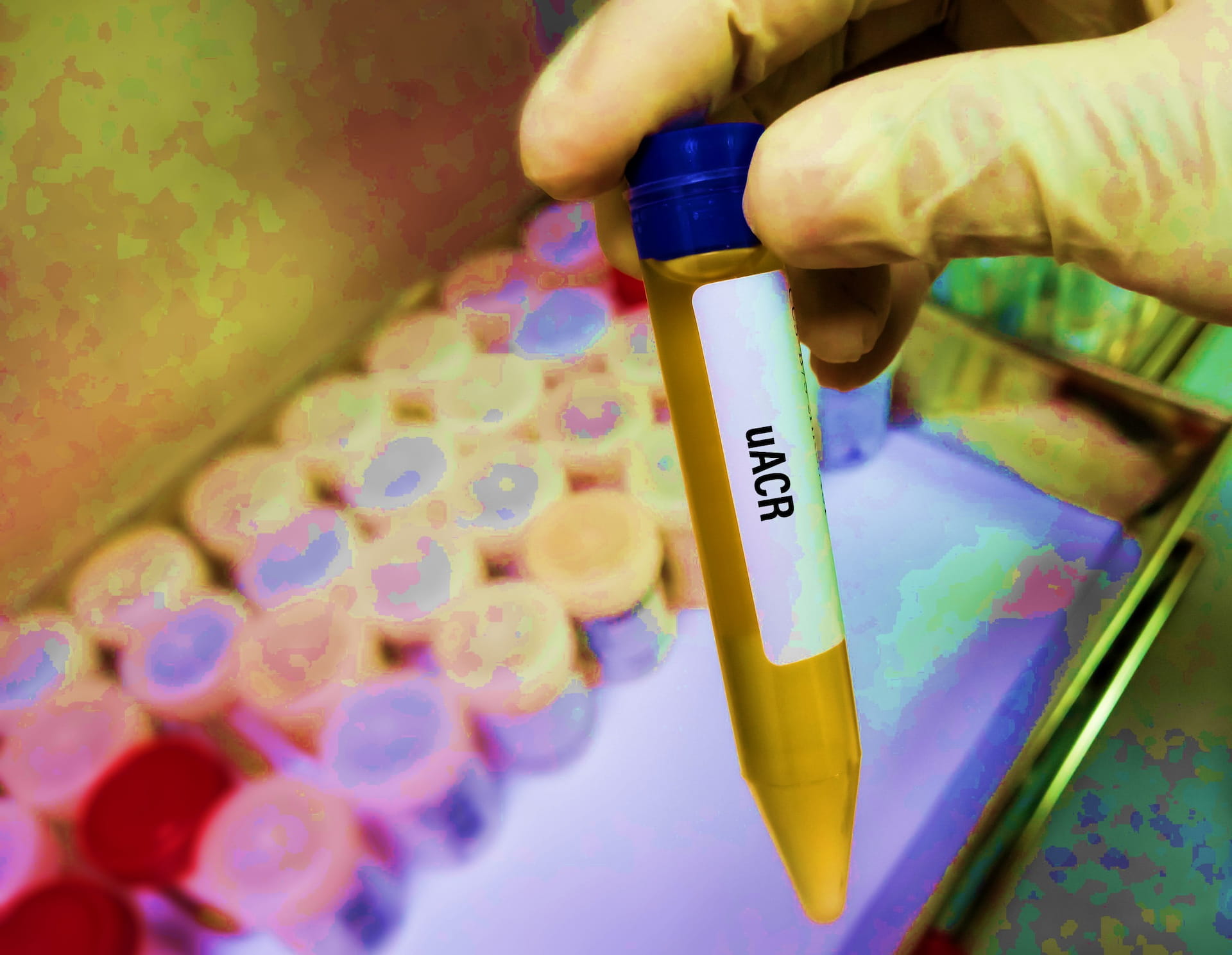
In a cohort of patients with chronic kidney disease (CKD), urinary albumin-creatinine ratio (UACR) and urinary protein-creatinine ratio (UPCR) provide clinically indistinguishable prognostic information for kidney and cardiovascular outcomes, according to a research letter published online Sept. 23 in the Journal of the American Medical Association.
Ashish Verma, M.B.B.S., from the Boston University Chobanian & Avedisian School of Medicine, and colleagues analyzed 3,742 Chronic Renal Insufficiency Cohort Study participants with paired UACRs and UPCRs from aliquots of the same 24-hour collection at the baseline visit. During a median follow-up of 15.0 years, kidney failure, CKD progression, and a composite of myocardial infarction, stroke, or heart failure hospitalization were assessed.
The researchers found that kidney failure occurred in 32.3 percent, CKD progression in 39.6 percent, and the cardiovascular composite in 31.5 percent (34.3, 56.8, and 35.7 per 1,000 person-years, respectively). There was a strong correlation for log-transformed UACRs and UPCRs. Cause-specific hazard ratios for kidney failure were 3.00 and 2.75 for UACR and UPCR, respectively, per standard deviation. There was minimal difference in discrimination, with a five-year time-dependent area under the curve (AUC) of 0.894 and 0.899 for UACR and UPCR, respectively. The change in AUC was less than 0.01 and change in integrated discrimination improvement was less than 0.02 across all three outcomes at five and 10 years.
“These analyses emphasize that the UACR and UPCR offer virtually indistinguishable risk prediction for clinical decision-making and that either marker is valuable,” the authors write. “Where the UACR is unavailable or unaffordable, the UPCR can be used without meaningful loss of information.”
UACR measures urinary albumin relative to creatinine, while UPCR measures total urinary protein relative to creatinine. UACR is the preferred measurement of albuminuria in current KDIGO guidance because it is more sensitive at detecting low levels of kidney damage and provides a stronger, more accurate prediction for the future risk of kidney failure, especially in patients with diabetes.
Proteinuria and albuminuria can provide important inflormation about kidney damage and risk of progression beyond eGFR alone. Results of UACR and UPCR can be affected by factors such as urine concentration and other clinical circumstances, so abnormal findings may warrant confirmation.
CKD disproportionately affects Black adults in the U.S., with the most recent United States Renal Data System (USRDS) revealing that CKD affects about 18.8 percent of Black adults, compared with 12 percent of Hispanic adults and lower rates in some other groups.
For Black patients, UACR and UPCR sit within a broader shift toward more individualized kidney risk assessment. Current guidance recommends using race-free approaches to estimating GFP rather than applying a race coefficient.
Abstract/Full Text (subscription or payment may be required)
By subscribing, you consent to receive emails from BlackDoctor.pro You may unsubscribe at any time. Privacy Policy & Terms of Service.
Are you a healthcare professional? Register with us today!