

For many medical students, Match Day marks the final stage of years of sacrifice, discipline, and determination. It’s a moment filled with anticipation, one where future physicians learn where they will train and begin the next chapter of their careers.
The National Resident Matching Program® (NRMP®) reported its largest Match class in history for 2026, with more than 38,000 applicants successfully matching into residency programs. With expanded positions, particularly in primary care, the results were widely celebrated as a step forward in addressing physician shortages across the country.
According to early Match Day data, 11,632 positions were offered in internal medicine, 5,491 in family medicine, 3,185 in pediatrics, and 404 in internal medicine-pediatrics. Primary care positions saw a 92.1 percent fill rate, a slight decrease from the previous year.
While specialties such as internal medicine (95.2 percent) and pediatrics (94.4 percent) maintained high fill rates, family medicine had a lower fill rate of 83.6 percent. Internal medicine-pediatrics, however, reached a 100 percent fill rate.
Despite these slight declines, the overall number of matched applicants increased — marking the largest Match in history. Organizations like the American Academy of Family Physicians (AAFP) and the American College of Physicians (ACP) emphasized the significance of this growth, particularly as the U.S. continues to face a physician shortage.
But while this may have been the largest Match Day, there is no clear data on whether Black physicians benefited from this growth. That’s because the racial demographic data is not included in initial Match Day releases. The National Resident Matching Program® (NRMP®), which oversees the Match process, told BlackDoctor Pro that this data is collected and reported separately in May.
So the question remains: are Black medical students benefiting equally? The NRMP also told BlackDoctor Pro that its role is to facilitate the placement process, not determine who is selected into residency programs. Individual institutions and residency programs ultimately decide which applicants they rank and accept — meaning equity in outcomes is influenced by decisions made at the program level, not the Match system itself.
So even though the 2026 Match racial demographic data has not yet been released, Black physicians are still successfully matching into residency programs across the country, though it remains unclear whether they are benefiting equally from this growth.
For Taylor Colleton, an MD candidate at Indiana University School of Medicine and incoming family medicine resident at MedStar Health/Georgetown University, Match Day was both affirming and emotional.
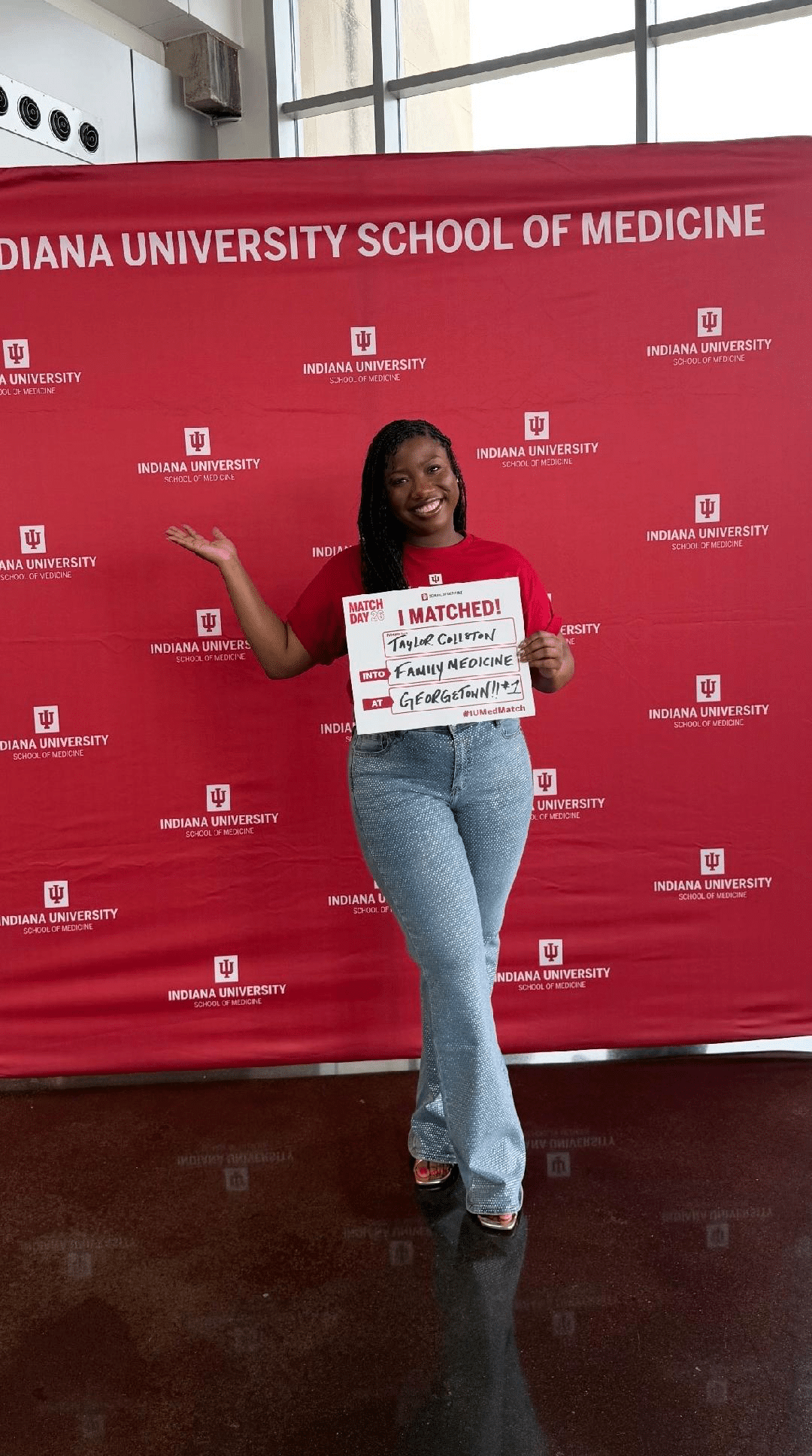
“I matched at MedStar Health/Georgetown University for family medicine in Washington, D.C., which was my number one choice, and I truly couldn’t be more excited and grateful,” she says.
Colleton first discovered the program at the Student National Medical Association (SNMA) Annual Medical Education Conference, and over time, her connection to it deepened.
“As a Black woman who completed medical school in an environment where I was often one of very few, it was very important for me to find a program where I felt a true sense of belonging,” she explains. “I wanted to be in a place where I could show up fully as myself.”
Colleton credits organizations, such as the SNMA and the AAFP, for helping her navigate the process, but she emphasizes that success often requires intentional effort.
“At every stage, you have to be intentional about seeking out mentorship and professional development,” she explains. “There’s a shared mindset among minority physicians of ‘lifting as we climb’, which makes those connections even more important.”
“The Match is one of the most stressful parts of the journey because, after doing everything you can to prepare, your outcome is no longer fully in your hands,” she says. “It represents years of work — but also a level of uncertainty that people don’t always understand.”
And though Match Day can be a celebratory day, it’s also a deeply emotional experience.
Christina Jefferson, MD, who matched into an OB-GYN residency at UT Southwestern, described the moment as both surreal and overwhelming.
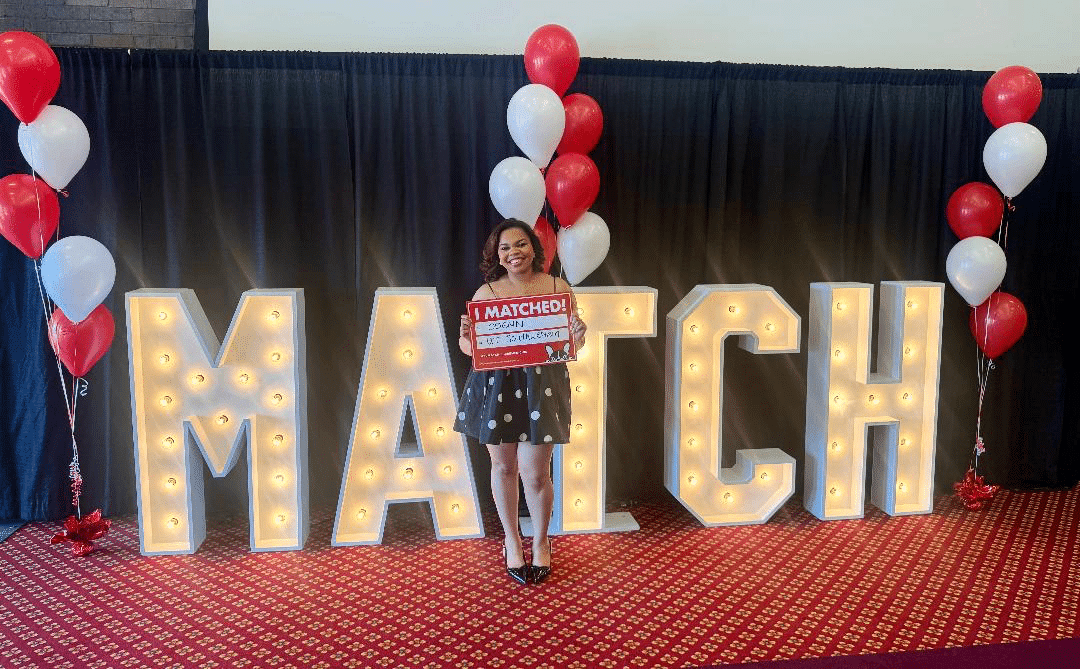
“You work so hard to get to this point, so once you match, it just feels like a long-awaited sigh of relief,” she says. “I’m the first physician in my family, so this degree feels like it’s for me — but also for everyone in my family.”
And while Jefferson is experiencing joy now, she also had some worries about her match process. “I think the unknown was the biggest challenge,” Jefferson explains. “You see so many joyous match posts, but you also hear stories of people not matching. I believed in myself, but I also knew it could go either way.”
With higher match rates this year, there is hope that more Black physicians will have equal access to residency opportunities and match into their desired programs in the years to come.
As Black physicians remain underrepresented in the U.S. healthcare system, making up a small percentage of the physician workforce compared to the overall population, this issue is more critical than ever. This gap has significant effects not only on diversity within medicine but also on patient outcomes, trust, and access to culturally competent care.
Without clear, timely racial data on Match Day outcomes, it becomes difficult to fully understand whether meaningful progress is being made or where gaps still remain.
While Match Day 2026 represents a milestone moment in medical education, behind those numbers are real experiences, stories of resilience, uncertainty, and determination.
For students like Colleton and Jefferson, matching is more than an achievement. It’s the realization of a dream shaped by years of sacrifice, and for many, the responsibility to pave the way for those who come next.
By subscribing, you consent to receive emails from BlackDoctor.pro You may unsubscribe at any time. Privacy Policy & Terms of Service.
Are you a healthcare professional? Register with us today!