
Ginger may improve blood glucose and lipid profiles in Type 2 diabetes. Explore potential impacts on patient management.
Diabetes mellitus is a common cardiometabolic disease in the United States, and it can be influenced by many causes, including genetics and lifestyle. Diabetes is marked by the pancreas’ inability to naturally control blood sugar levels.
Type 1 diabetes is sometimes referred to as juvenile diabetes, since it often appears in childhood. With T1D, the pancreas does not make enough––or any insulin to lower blood sugar. Type 2, on the other hand, While there is no cure for diabetes, T2D often can be controlled through diet and exercise.
Diabetes is treated with various pills and insulin injections, but as with many conditions, recent studies show incorporating ginger into your diet could improve your blood glucose levels. According to registered dietitian Rhyan Geiger, ginger is not a new technique for improving health, despite the studies being conducted in the last ten years. She says, “The use of ginger for medicinal purposes has been around for centuries, particularly in Traditional Chinese Medicine. While research into ginger’s effects on blood sugar has gained traction over the past two decades, its historical use in wellness and digestion dates back much further.”
Outside of adding intense flavor to their food, diabetics can potentially benefit from daily consumption. Adding ginger to the diet significantly reduced fasting blood sugar and HbA1C, as well as helping to combat oxidative stress, which can damage blood vessels and worsen complications like nerve damage, cardiovascular issues, and kidney problems in diabetes. Its antioxidant properties, mainly from gingerol, support the body’s defense systems.
Additionally, ginger may improve lipid profiles and body mass index, though it’s unclear how much is needed for optimal results. Some research suggests it can reduce “bad” LDL cholesterol and increase “good” HDL cholesterol. Ginger’s anti-inflammatory properties may also aid in weight loss and improve heart health. Type 2 diabetics may also gain protection against free radicals and notice lower blood pressure after adding ginger to their diets.
Ginger offers benefits for the average person, including as a digestive aid, but the benefits for diabetics are enough to potentially alter levels and maybe see a change in their treatment plan (though ginger is not a substitute for the plan prescribed by a doctor).
Geiger states that ginger is easy to incorporate into your existing diet, but speak to your doctor anyway. She says, “Ginger can be a beneficial addition to a balanced diet but should not replace diabetes medications or primary treatment plans. Always consult a healthcare provider before making significant dietary changes, especially if you have diabetes.”
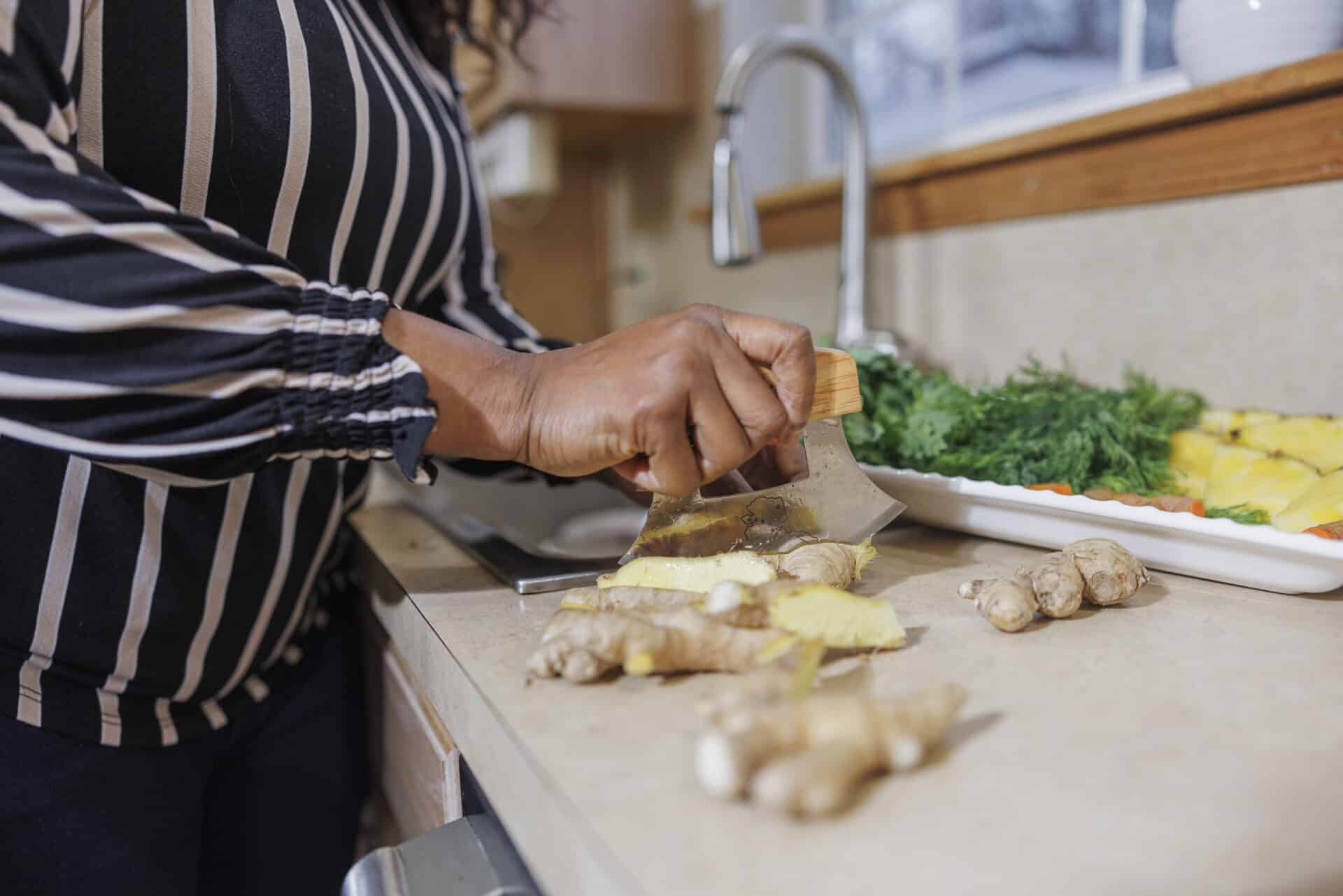
Ginger can be purchased in the natural form in the produce aisle, or in powder or tea form. There are also ginger supplements that come in capsule form. It naturally has a strong flavor when consumed by itself, so it is best to mix into a dish or drink. You can steep ginger into tea or juice it for ginger shots or juice blends. Fresh ginger also works well in stir-fries and other cooking. In powder form (found in the spice aisle), it can be sprinkled on top of oatmeal or in baked goods. Be sure that any supplements are third-party tested for safety.
Since ginger can potentially lower fasting blood sugar, it is important to consume food as you normally would as opposed to fasting or cutting excess carbs to avoid hypoglycemia. When ginger is consumed as food, aside from allergies, there are no real dangers. Ginger supplements carry more risks, but if purchased from a reputable place and third-party tested, they are safe to consume. Also, be sure that they are pure and not mixed with any other herbs or medicines.
Ginger supplement consumption is not recommended for those who are pregnant and breastfeeding, since they have not been studied enough. However, ginger root and in spice form are okay to add to food. Large doses of ginger are known to cause stomach upset or indigestion, though smaller doses and servings are typically known to help cure nausea.
Geiger believes that ginger may contribute to better blood sugar control and improved HbA1c levels in individuals with type 2 diabetes. However, she explains that it can’t be the only treatment. She says, “Ginger should not be relied upon as a sole treatment. The most effective approach to blood sugar management includes dietary modifications, regular exercise, and, when necessary, medical interventions.”
More in-depth research needs to be done, but ginger is a fairly harmless addition to the diabetic’s diet, as long as blood sugar is monitored.
References
By subscribing, you consent to receive emails from BlackDoctor.pro You may unsubscribe at any time. Privacy Policy & Terms of Service.
Are you a healthcare professional? Register with us today!