

More than 80 million Americans rely on Medicaid for health coverage. Many are children, older adults, and people with disabilities who depend on consistent access to primary and specialty care. Yet new research suggests that enrollment in Medicaid’s provider network does not always translate into actual care. A growing number of physicians listed as Medicaid providers deliver no services to Medicaid patients—a phenomenon researchers have now dubbed “ghost physicians.” When access exists only on paper, patients are often forced to delay care or seek treatment after conditions have worsened, frequently in urgent care clinics or emergency departments.
Black Americans are disproportionately represented among Medicaid beneficiaries, accounting for about 1 in 5 beneficiaries while making up roughly 14% of the U.S. population. When physicians who claim to accept Medicaid don’t actively treat these patients, existing care gaps can widen—contributing to persistent health inequities and poorer outcomes in Black communities.
A recent study published in Health Affairs examines physician participation in Medicaid and reveals troubling gaps between enrollment and actual care delivery.
Key Findings
To better understand physician participation, the research team—led by Jane M. Zhu, MD, MPP, MSHP, a primary care physician and Associate Professor of Medicine at Oregon Health & Science University—analyzed physician enrollment files and Medicaid administrative claims from 2019 to 2021. They focused on five physician specialties: cardiology, dermatology, ophthalmology, primary care, and psychiatry.
Dr. Zhu and her team analyzed the number of Medicaid-enrolled physicians with any claims activity and the volume of Medicaid patients and encounters per physician.
Despite high enrollment rates—ranging from 68% to 98% across specialties—nearly 28% of Medicaid-enrolled physicians delivered no care to beneficiaries in 2021. Medicaid participation varied widely by specialty, with more than 40% of psychiatrists being “ghost physicians” who saw no Medicaid recipients in a given year. In contrast, primary care physicians were most likely to be high-volume “core” providers.
While most physicians maintained Medicaid participation over time, about one-fifth of ghost physicians and one-third of “peripheral” providers (seeing 1-10 Medicaid patients per year) transitioned to a higher-engagement group between 2020 and 2021.
The findings underscore the need for higher participation rates among Medicaid-enrolled physicians offering specialty care. The research team suggests targeted policy efforts—particularly in specialty areas like psychiatry—could increase physician engagement and reduce care gaps.
Who Are “Ghost Physicians?”
“Ghost physicians” are physicians enrolled in Medicaid but with no Medicaid patient visits—meaning they’re listed in provider directories but not actually serving beneficiaries. The term “ghost” reflects the provider’s invisibility to patients despite their administrative enrollment, meaning beneficiaries listed in directories may be unable to access care from them.
As mentioned in the study findings, psychiatrists accounted for the largest percentage of ghost providers—in contrast, primary care physicians had higher core participation but still a noticeable non-participation rate.
There are a few reasons why Medicaid-enrolled physicians don’t have a large volume of Medicaid patients. Some providers may simply enroll because of employment or health system requirements, even if they have no intent to treat Medicaid patients. For others, a full schedule of commercially insured patients may leave them with no bandwidth to care for Medicaid patients. Additionally, administrative or capacity barriers could also play a role.
What This Means for Patient Access
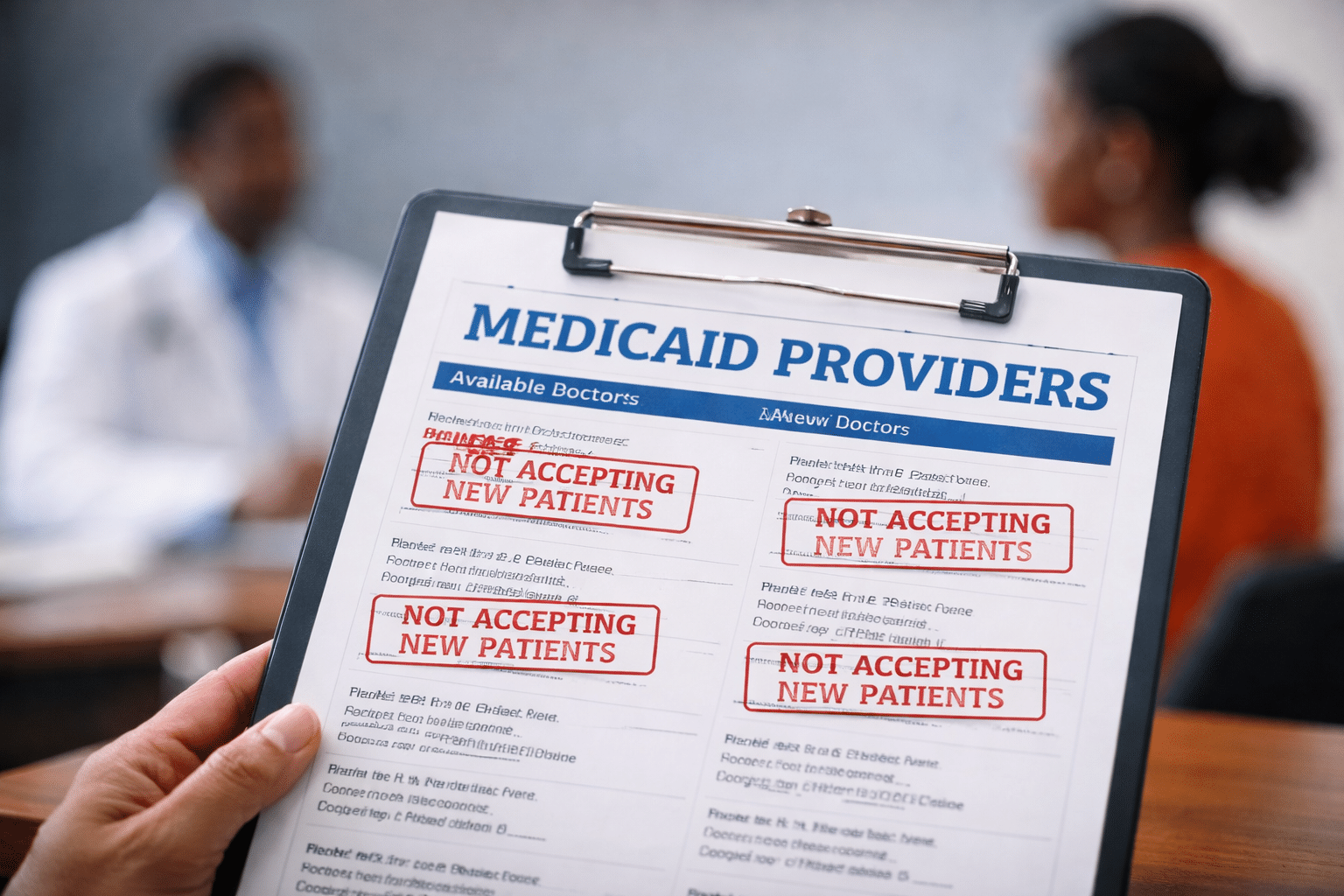
“Ghost physicians” have a significant impact on the Medicaid patient population. These providers are still listed in Medicaid provider directories, which give beneficiaries a false sense of access.
Patients may attempt to schedule appointments with listed providers only to find they are not accepting Medicaid patients or have no available capacity. Ultimately, this can lead to delayed or foregone care. Delayed care can worsen health outcomes and increase long-term costs for patients, which can be detrimental for certain demographics who already face many structural barriers to quality healthcare.
Why Enrollment Numbers Aren’t Enough
Enrollment counts alone are insufficient measures of access. To increase physician engagement in Medicaid care, potential strategies include realigning incentives, implementing payment reforms, and targeting recruitment in high-need specialties.
Future reform could focus on measuring and increasing true participation rather than passive enrollment.
Turning Data Into Action
A significant number of Medicaid-enrolled physicians deliver no actual care to recipients, revealing care gaps between network lists and real access. The latest research cautions against relying solely on enrollment counts when assessing Medicaid access—and highlights the need for policymakers to create tools that measure and strengthen true provider engagement.
As Medicaid continues to play a crucial role in getting people access to healthcare, closing the care gap between enrollment and service delivery is crucial for equitable health access and quality care outcomes.