Food insecurity in college remains a significant problem for many undergraduate and graduate students, including those pursuing medical degrees. Despite perceptions that medical students are financially secure, rising educational costs and reliance on student loans can create substantial financial strain.
Black medical students, in particular, face higher rates of food insecurity than their white peers. Socioeconomic factors, rising educational costs, and unmet financial needs contribute to these disparities in food access.
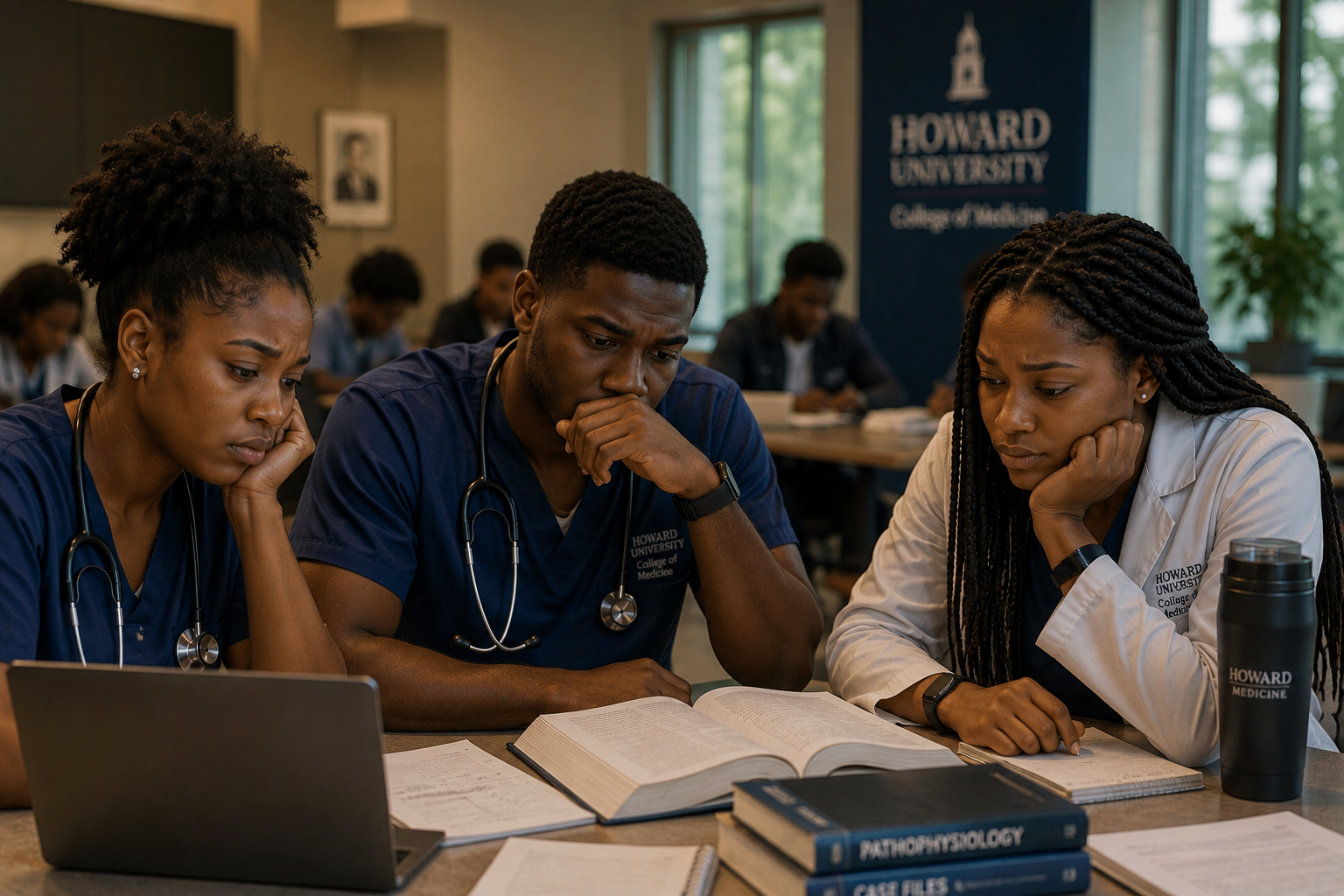
A recent study published in the Journal of Racial and Ethnic Health Disparities found that many medical students at the HBCU Howard University faced significant food insecurity. These findings highlight an often overlooked barrier to academic success and well-being.
In the spring of 2025, researchers conducted a cross-sectional study that incorporated the USDA Six-Item Short Form Food Security Scale, which was distributed to Howard University medical students. Additional questions separate from the scale assessed students’ demographics, financial concerns, nutritional status, and the perceived impact of food insecurity.
Seventy-nine percent of the 120 respondents identified as Black. As one of the nation’s leading historically Black medical schools, Howard University plays a critical role in training future Black physicians.
Here are the standout results from the survey:
More than four in five respondents had concerns about their living expenses, and 35 percent said that food insecurity had greatly affected their academic performance in the past month.
Almost all respondents (92 percent) vouched for on-campus food resources, with 83 percent volunteering to maintain a student-run garden.
The study’s findings are among the first institution-level data from an historically Black medical school and underscore the need to create better resources to support students facing financial hardship.
When students’ basic needs aren’t met, their academic performance in medical school is greatly affected. Students experiencing food insecurity may struggle with concentration, memory, and academic engagement, factors that can affect educational performance and overall well-being. Financial hardship and malnutrition can lead some students to reduce their course loads, take semesters off, or drop out of school entirely.
Food insecurity can also affect a student’s physical and mental well-being. Having restricted budgets can force students to rely on cheap, calorie-dense but nutrient-poor meals. Over time, this diet can cause nutritional deficiencies, frequent sicknesses, and long-term health risks.
Dealing with constant hunger and financial strain is also associated with higher levels of anxiety, stress, and depression.
Ultimately, socioeconomic stress and educational burden can compound one another, further affecting a medical student’s academic performance and overall well-being.
Historically Black medical schools have long played a significant role in training future generations of Black physicians, who are underrepresented in medicine. About 65 percent of Black graduate students take out federal and/or private loans to finance their education. Financial pressures may disproportionately affect students — particularly Black students — who rely heavily on loans or have fewer generational financial resources. Basic-needs insecurity can become an equity problem if medical students are forced to manage housing, food, and educational expenses simultaneously.
When students face barriers to meeting basic needs, the consequences extend beyond individual well-being and may affect efforts to strengthen a diverse physician workforce equipped to serve underserved populations.
Because Black physicians are more likely to practice in underserved communities and care for Black patients, barriers that threaten student success may ultimately have downstream effects on healthcare access and equity.

As the study reported, many students supported additional campus food resources to address unmet basic needs at medical school. With food insecurity becoming an increasing concern for Black medical students, medical schools must step in to assist — whether through food vouchers or financial counseling.
Below are several practical strategies that can better support students dealing with food insecurity:
Change isn’t expected to happen overnight, but small yet meaningful steps can help medical students focus more on their studies rather than on where their next meal will come from.
Healthcare systems are increasingly focused on addressing physician wellness and burnout, but earlier interventions must start during medical school. Supporting students’ basic needs during training can be seen as an early workforce intervention — ensuring they have the resources they need to thrive academically, mentally, and physically. Efforts to diversify and strengthen the physician workforce must include addressing students’ basic needs during training. As this study suggests, food insecurity is not simply a hardship — it may be a barrier to academic success, wellness, and long-term workforce development.
By subscribing, you consent to receive emails from BlackDoctor.pro You may unsubscribe at any time. Privacy Policy & Terms of Service.
Are you a healthcare professional? Register with us today!