
How Sickle Cell Disease Causes Premature Brain Aging
Sickle cell disease accelerates brain aging by 14 years, impacting cognitive function. Understand implications for Black patients' care strategies. Read more.

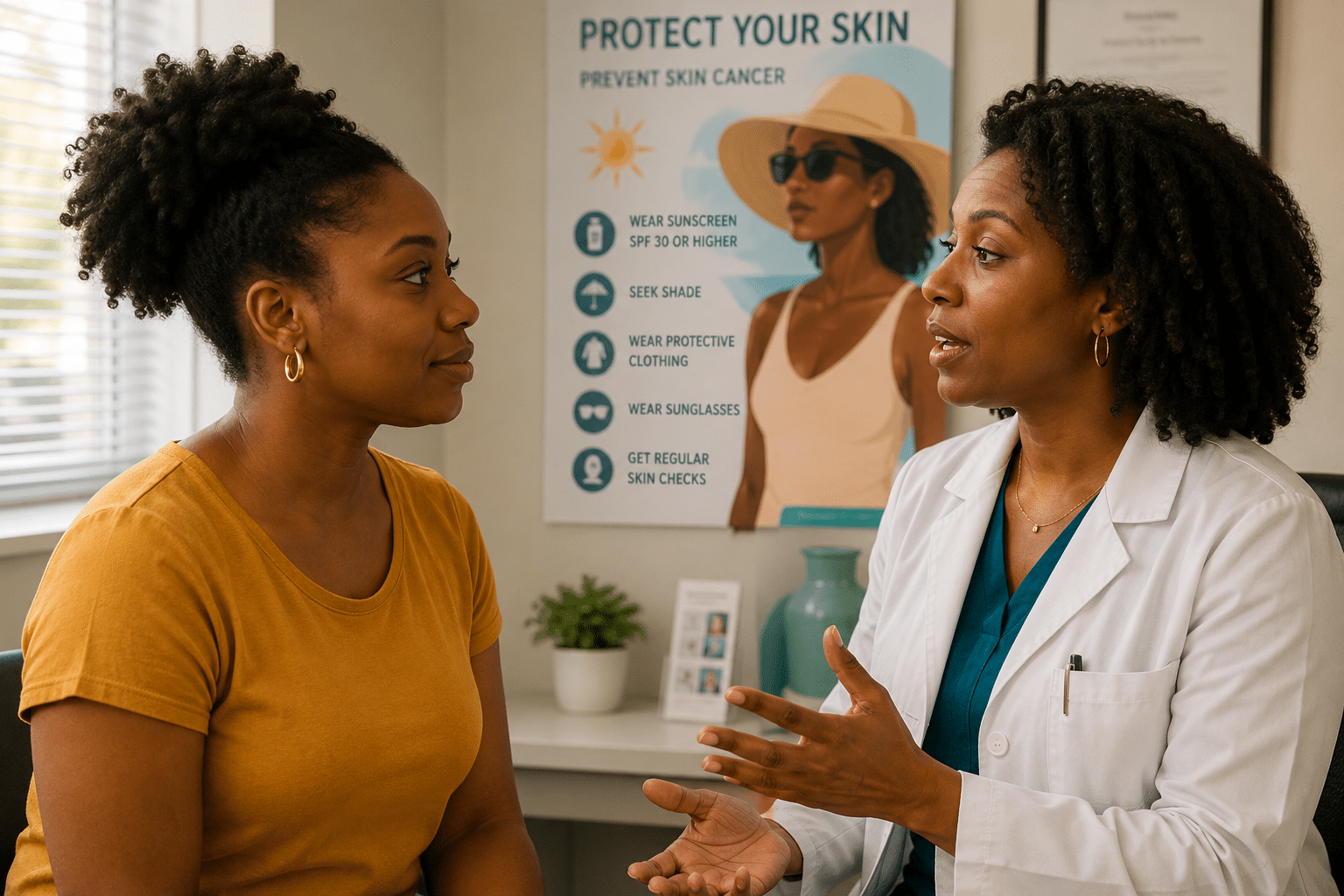
There is a popularized misconception that people of color, specifically Black individuals, don’t require sunscreen or suffer from skin cancer due to the larger amount of melanin in their skin. This idea, however, is far from the truth. While the incidence of skin cancer is lower among Black individuals, making up only about 1 to 2 percent of all cases, survival rates are often much lower because they are often diagnosed in the advanced stages of disease.
While it’s unclear where this incorrect belief about sun safety came from, it can have severe consequences on the health of Black Americans. Individuals may not prioritize their skin safety as recommended, risking developing a form of skin cancer like melanoma. Thus, clinicians play a critical role in correcting misconceptions before they become misdiagnoses.
Including the myth that “Black people don’t get skin cancer,” the cultural perceptions around sunscreen use for people of color can be damaging.
Shamsa Kanwal, M.D., a board-certified dermatologist, practicing medical doctor, and medical and health writer, noted that sun safety in Black communities is often overlooked due to misconceptions.
“Many people were taught that darker skin does not burn or get skin cancer,” Dr. Kanwal told BlackDoctor. “Melanin provides some natural protection, but it does not make anyone immune to UV damage, pigmentation, premature aging, or skin cancer. Sunscreen marketing that fails to address white cast and darker skin tones has also made sun protection feel less relevant or accessible.”
A 2023 study found that Black people were less likely to be concerned about the threat of skin cancer, despite having more unfavorable outcomes. The same study suggested that this could be due to lower socioeconomic status and limited health literacy.
Not only are Black people underrepresented in public health campaigns about skin safety, but there is also an overall lack of counseling during routine visits, as well as lower awareness about warning signs, underscoring the need for better patient education in the exam room.
For providers, it is essential to educate patients about melanin and how this natural pigment can reduce, but does not fully eliminate, the risk of UV damage. Even individuals with high melanin levels can still be at risk for skin cancer, even if that risk is decreased compared to those with low melanin levels.
“Providers should teach patients that UV exposure affects every skin tone,” Dr. Kanwal said. “In Black skin, it can worsen dark spots, melasma, and uneven tone, even when there is no obvious sunburn.”
Unprotected and/or prolonged UV exposure can cause severe complications, both immediate and long-term. Besides the risk of skin cancer, UV exposure can cause hyperpigmentation, premature aging, and actinic keratoses.
The most preventable risk factor for skin cancer is unprotected UV exposure.
Understandably, the risk of skin cancer can cause anxiety and distress in patients. Providers must be competent in discussing skin cancer risk while not creating unnecessary fear for their patients. It is important to emphasize preventative care and early detection. For Black patients, one of the biggest risk factors for skin cancer is delayed diagnosis.
While UV exposure to Black skin is still a risk factor for developing skin cancer, the overall risk is lower than in white populations. Most cases of skin cancer in Black patients are squamous cell carcinoma, while melanoma makes up a smaller percentage. The risk of developing melanoma is 1 in 1,000 for Black individuals.
Providers can educate their patients on common warning signs. Nicole James, MD, a resident doctor completing a dermatology post-doc at Stanford University, explained the importance of instructing patients in self-assessment.
“Patients should self-examine to look for any changing or evolving moles, especially on the hands, feet, and nails,” she told BlackDoctor. “Any irregularly shaped, darkly pigmented lesion with uneven color or borders warrants evaluation. Non-healing sores or ulcers, particularly on the lower extremities or in areas of chronic scarring or inflammation, could indicate other forms of skin cancer. Look for any dark, longitudinal band on a fingernail or toenail (> 6 mm), especially if it is widening, has irregular pigmentation, or extends onto the surrounding skin.”
Dr. James emphasized that patients with weak immune systems, like organ transplant recipients, as well as those with human immunodeficiency virus (HIV) or hematologic malignancies, are at increased risk.
Black patients should also be aware of acral lentiginous melanoma, which is an aggressive form of skin cancer more common among Black patients. It often appears in areas not typically exposed to the sun. Commonly affected areas include the palms, soles of the feet, and the areas under the nails.
The most important recommendation for any patient is to wear a broad-spectrum, water-resistant sunscreen, ideally SPF 30 or higher. SPF 50 is ideal for any long outdoor activities. Patients should apply the product every two hours outdoors, as well as after heavy sweating or swimming, explained Dr. Kanwal.
“Add shade, sunglasses, a wide-brim hat, and tightly woven or UPF clothing whenever possible,” she added. “A sunscreen with an invisible finish is often the best choice because consistent use matters most.”
There is a wide range of Black-owned sunscreen brands available, including Black Girl Sunscreen, Bolden Skin Care, Urban Hydration, Cay Skin, and Undefined, that can be recommended to patients with darker skin tones who may be concerned about a white cast.

Some topics, such as blood pressure, nutrition, vaccinations, and smoking cessation, are considered priorities at routine and specialty care visits, and preventive care for UV safety is equally important. Providers should consider regular visits an opportunity to discuss sun safety with their patients. Some patients might have little to no skin health literacy, which can be life-threatening.
Black patients are three times more likely to be diagnosed with late-stage melanoma than white patients. While their risk for developing skin cancer is lower, late diagnoses and lack of preventative care can be deadly. Providers need to educate patients of all skin tones, but especially Black individuals, about UV safety. It’s time to put to rest the myth that Black skin doesn’t require UV protection.
While SPF 30 is an appropriate minimum for daily use, it is recommended to use SPF 50 if participating in long outdoor activities or exercise. Make sure to find one with broad-spectrum coverage and UVA and UVB protection.
While it is harder for Black people to get sunburnt, this community is not immune to the condition. When it does occur, it is often more difficult to recognize. On darker skin, sunburns can present as itchiness and darkening of the skin.
While sunscreen helps reduce UV-related skin damage and the risk of skin cancer, it cannot eliminate risk entirely in any skin tone.
By subscribing, you consent to receive emails from BlackDoctor.pro You may unsubscribe at any time. Privacy Policy & Terms of Service.
Are you a healthcare professional? Register with us today!